


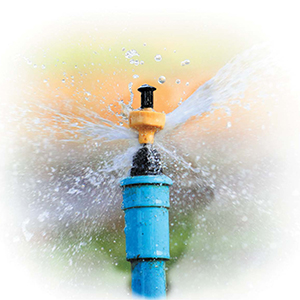
 Residents could face fines if they fail to reduce their consumption
The Executive Order issued by Gov. Jerry Brown took effect, requiring mandatory water use cutbacks aimed at conserving water as California enters its fourth year of extreme severe drought conditions.
Water agencies across the state are required to reduce their water use by varying amounts, as compared to the amount they used in 2013.
For Inland Empire water agencies, the Executive Order means cutting water usage by 24 to 36 percent. If they fail to do so, local water districts could face fines of up to $10,000 per day.
Even individual residents refusing to cut back could face fines of up to $500 per day. Local agencies in the Inland Empire are hoping it doesn’t come to that.
“We are encouraging residents to see this period as an opportunity to make a permanent and positive change in the way we use water in the Inland Empire,” said Mark Bulot, president of San Bernardino Valley Municipal Water District (Valley District), which held a press conference this morning at its headquarters in San Bernardino to urge Inland Empire residents to cut their outdoor water use in half.
“Our forefathers who came to California from the East Coast and Midwest during the past century brought with them a taste for big lawns,” said Valley District General Manager Douglas Headrick. “But big lawns are simply not viable here given the frequency with which we experience droughts in this state.”
Water agencies are offering customers a rebate to remove turf and replace it with Water Saving Garden Friendly plants, which consume relatively little water, while creating more interesting landscapes with flowers that attract birds and butterflies.
Valley District has launched a major public information campaign with a dozen other water agencies across Riverside and San Bernardino counties to promote dramatic changes in the way Inland Empire residents use water—and give practical tips on how the region can reduce water usage by 24 to 36 percent and avoid any fines.
Using fifteen, 55-gallon barrels to illustrate how much water an average family of four uses every day, Headrick pointed out to reporters that most households use 70 percent of their water outside.
So with this figure in mind, the easiest way to comply with the Executive Order is to cut outdoor water use in half.
Headrick said most homeowners, for one reason or another, tend to overwater their landscapes by an estimated 20 percent. That much can be saved just by eliminating water waste. The next step is the hard part, however, and will require turning off the water for at least half of each household’s lawn area for the duration of the drought.
But while big lawns have been the centerpiece of urban landscapes in California, Valley District Director Susan Longville said attitudes are changing. People are realizing that it is no longer practical to have an English tea garden in Southern California.
“These are the times that define us,” Longville said. “What we do today, tomorrow and next year with our landscaping will determine what our future looks like. If we maintain the right attitude, we can bring about permanent changes in our landscaping practices that will help us conserve water and enhance our water security on a permanent basis.”
For more information on Water Saving Garden Friendly Plants, upcoming plant sales and other water saving tips, please visit www.iefficient.com.