



In the interest of full disclosure I must admit the extent of my relationship to the University of California, Riverside. It is where the VOICE started over 42 years ago. It’s where I received both my master’s and doctorate degrees. I taught my first college classes and I met my husband there. He earned his bachelor’s degree on the campus and is a professor in the Department of Theatre. Yes, my opinion of UCR is somewhat biased.
During my seven-year tenure in graduate school during the 1990’s, there were five African-American women earning doctorate degrees in English, which for a relatively small school was pretty remarkable. Dr. Venetria Patton is an associate professor at Purdue. Dr. Carol Henderson is a professor at the University of Delaware. Dr. Sandra Grayson is a professor at the University of Wisconsin, Milwaukee. Dr. Kwakiutl Dreher is an associate professor at the University of Nebraska, Lincoln. And Dr. Stephanie Dunning, who I helped recruit while still a graduate student, is an associate professor at Miami University of Ohio. This all happened well before UCR was considered a model for student diversity. Long before the university gained a reputation for graduating African-American students at a higher rate than white students. And long before the university’s Black student population was larger than any other UC campus.
But I considered it then, and continue to see the campus today, as a unique place, probably the most significant public asset in the region. Just this week Time Magazine agreed with me, listing UCR as the #1 university in the country based on the new White House metrics presented by the Obama Administration: graduation rate, tuition, and the percentage of students who receive Pell Grants.
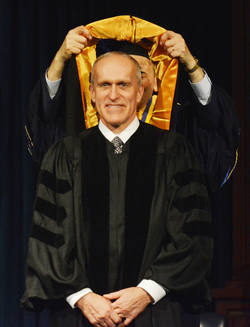
Late last week the campus celebrated the investiture of Chancellor Kim Wilcox, UCR’s ninth leader since the campus was founded 60 years ago. During his investiture remarks Chancellor Wilcox presented the history of the public land grant university and how UCR is a shining example of the vision President Abraham Lincoln and Congressman Justin Morrill had in mind when they developed the concept in the 1860s.
In closing, I’d like to share that portion of his speech with you:
Many have called the land-grant system America’s most original and most important contribution to higher education. I consider it one of the greatest contributions to our nation and to the world.
I’ve also found a place that continues to live the values of Morrill and Lincoln. Where over half of our students are among the first in their generation to attend college, where students from all backgrounds are welcome, and where everyone succeeds – our students graduate at the same rates, regardless of racial and ethnic category or income level.
These amazing attributes are a direct legacy of our land-grant roots and emblematic of the commitment that UCR has to our students and to all of the citizens of the state.
We continue to prove Lincoln correct: “regular citizens,” not just the privileged few, have a place in higher education and a place in shaping our future.
UCR is also more connected to its community than most other research universities. While our scientists, scholars and engineers work at the cutting edge of knowledge, much of that work is informed by, and focused on, the needs and issues of the region and the state.
And I’m happy to report that the campus is increasingly being recognized for these accomplishments – for the qualities that make UC Riverside what it is.
Over the course of the past year, for example, UCR has ranked highly on measures that include both our research prowess and our impact on students, particularly in terms of social mobility – just the kinds of things Abraham Lincoln and Justin Morrill wanted us to be good at!
So by staying true to Morrill’s aspirations, while continuing to evolve in their implementation, we have emerged as a new model for higher education in America today.
To subscribe to my weekly blog Rants & Raves visit mygoldenstate.tumblr.com or follow me on twitter @mygoldenstate.