


Breanna Reeves | Black Voice News and IE Voice
The Sherman Indian Museum in Riverside is a large community space that allows alumni of Sherman Indian Boarding School and their families to congregate and stay connected. When the pandemic resulted in non-essential business closures and restrictions on gatherings, community members were unable to convene in this space.
Lorene Sisquoc (Apache/ Mt. Cahuilla), the museum curator and community leader, and Daisy Ocampo (Caz’Ahmo Indigenous Nation of Zacatecas), public historian and assistant professor of history at California State University, San Bernardino (CSUSB) recognized that there was a need to create a digital platform to bring people back together.
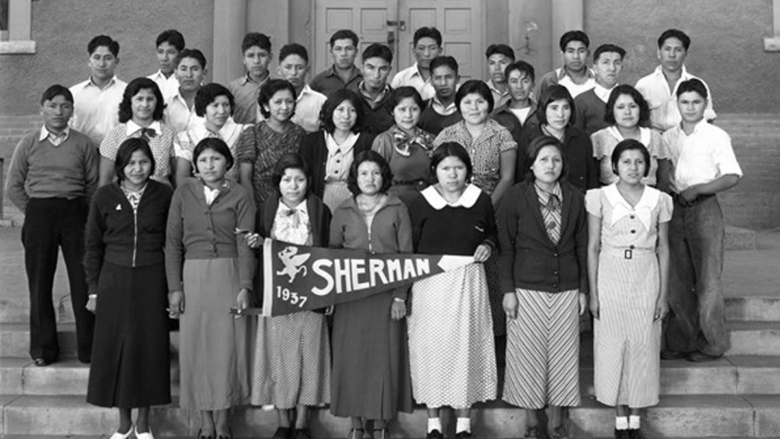
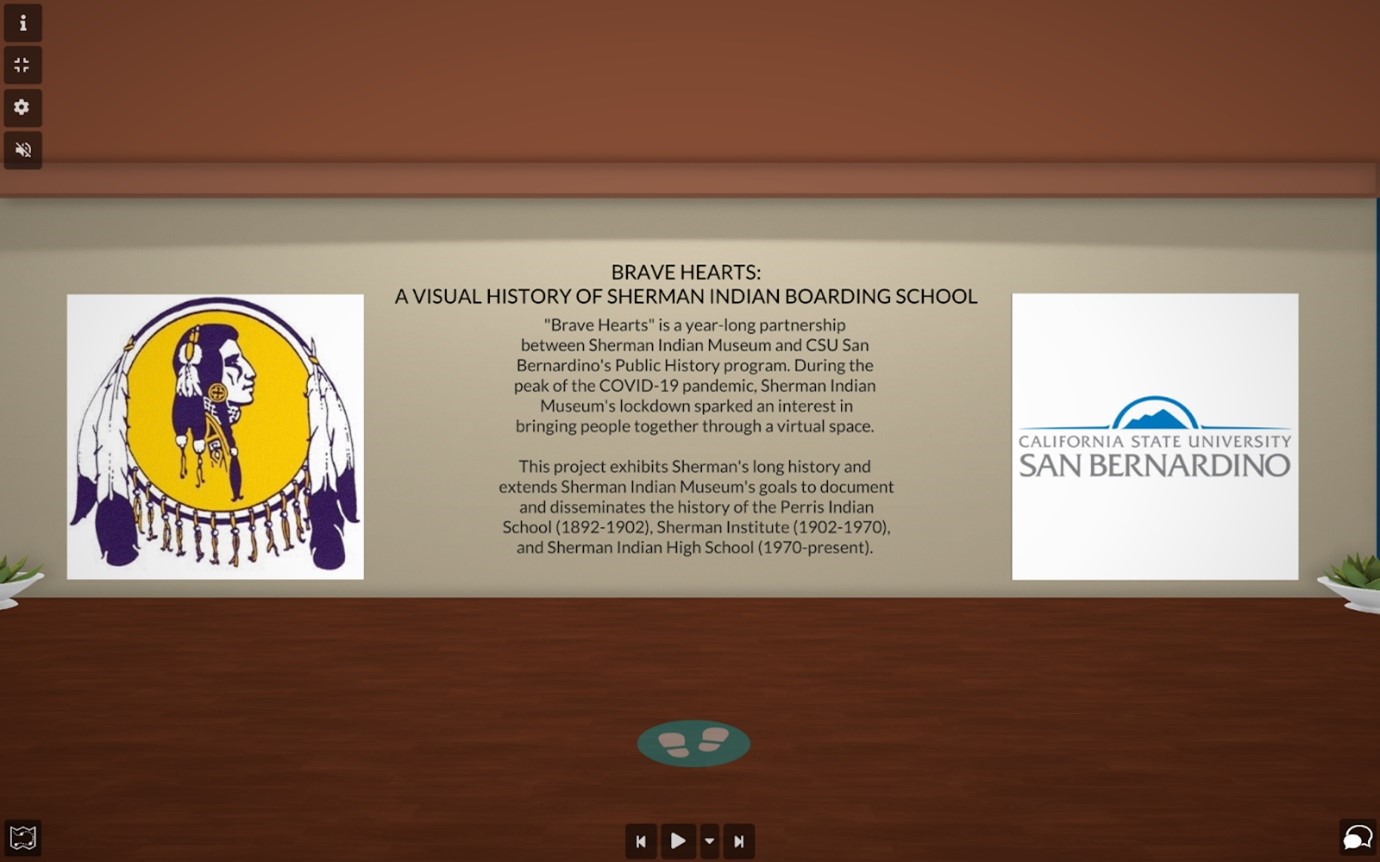
A year in the making, the virtual museum titled, “Brave Hearts: A Virtual History of Sherman Indian Boarding School” examines the legacy of the Sherman Indian Boarding School, its students, and the impact of the school on the greater Inland Empire. The public can view the museum here and explore the exhibit through a self-guided tour.
While teaching a course on exhibit design, Ocampo decided to create a classroom project that involved 26 of her students, designing a virtual exhibit with the help of the Sherman Indian Museum, Calisphere archives, and community members. The collaborative effort was funded by a $5,000 grant that Ocampo received from CSUSB’s Office of Community Engagement during the last academic year.
Creating a virtual exhibit and community space
Ocampo’s students were assigned to create different sections of the museum using photographs, videos and oral histories from community members and former Sherman Indian Boarding School students.
Ocampo explained that the collaboration between the museum and the students was very important to the project. With the resources from the museum and guidance of Sisquoc, and curator Amanda Wixon (Chickasaw/Choctaw), students were able to think “beyond the archive as just paper trails and photographs” which are usually told from the perspective of administrators, Ocampo said. They were able to include and recognize community voices and experiences as sources of knowledge.
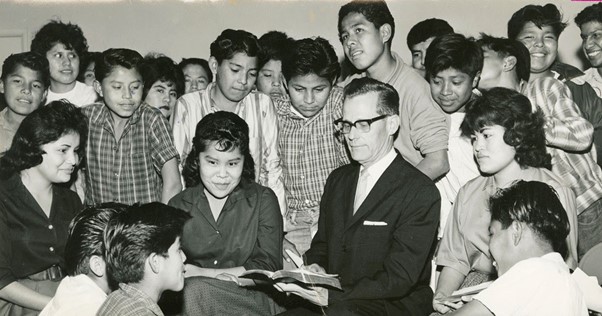
The virtual museum consists of multiple “rooms” which share the vast history of the Sherman Indian Boarding School, previously called the Perris Indian School in 1892 before it was relocated to Riverside and renamed Sherman Institute in 1901. The history of the boarding school is complex, and the museum navigates the history by weaving together student resilience and the injustices experienced by Native American students who were removed from their homes and placed into such institutions to enforce assimilation.
Sherman Indian Boarding School
The “Brave Hearts: A Virtual History of Sherman Indian Boarding School” museum also highlights the activism and success of former students of Sherman Indian Boarding School such as several students who became Navajo code talkers and learned the importance of being language keepers, despite being prohibited from speaking their languages at the school.
As conversations continue to arise regarding more inclusive education and teaching a historically accurate curriculum, the museum also exists as a digital tool for educators to use in the classroom.
“I know that one public concern that people have is ‘our kids are too small to learn these things,’ but actually what we’re learning is that learning these histories from an early age really builds empathetic, culturally responsive students and people in life,” said Ocampo. “And I think that’s very important to cultivate.”
Ocampo further stressed the importance of building a sense of social justice as part of students’ educational experience.
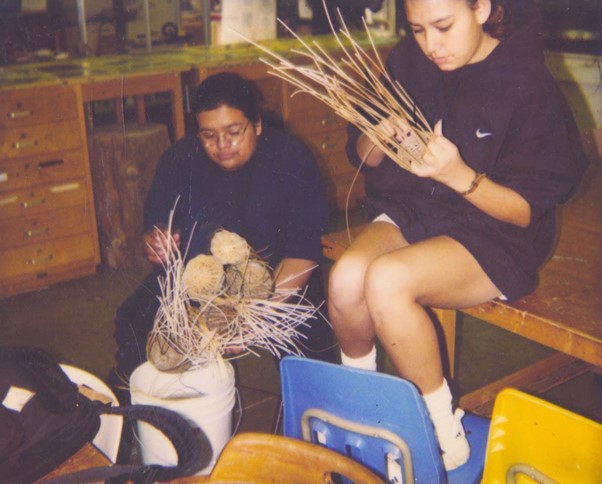
The Sherman Indian Museum stands proudly as an educational institution and community site for residents and students to learn more about the history through accurate historical accounts and representation. Neighboring the museum, today Sherman Indian High School (SIHS) is an off-reservation boarding school for Native American students. According to the school, students represent more than 76 federally recognized tribes from across the U.S. and about 68 percent of students come from reservations across the nation.
“Sherman Indian High School serves today, many Indian students in our region and also gives them that hope to continue to move forward in their education,” said San Bernardino Assemblymember James C. Ramos (Serrano/Cahuilla), the first California Indian elected into the state legislature.
“Even though we have to look at the past as far as the boarding schools and what truly happened during those times, we also have to acknowledge that Sherman Indian High School serves as a beacon of light within the Indian community to preserve our culture, to record these songs, and to make sure that all those who are seeking a higher education in Indian country are afforded that opportunity to move forward.”