


By S. E. Williams
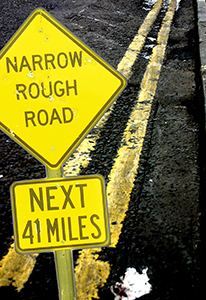
A study by the American Association of State Highways and Transportation revealed California roads rank 49th among the nation’s 50 states in regards to condition of its roadways.
The nonprofit Road Information Program further determined poor roads cost the average California driver about $590 annually—almost twice the national average; and, certainly due in part to crumbling streets, highways and roads. However, this cost pales when compared to the cost per capita incurred by drivers in the state’s major cities—the cost is increased to more than $700 per year.
This data should not be surprising to the state and local officials when you consider California’s rank as 47th in the nation relative to transportation spending.
Officials estimate the state roads require about $59 billion dollars in road maintenance; while cities and counties have estimated their needs in this area at more than $78 billion dollars.
Governor Jerry Brown recently called for a special legislative session on this issue while at the same time, business and labor groups have called for raising at least $6 billion dollars for road maintenance. This approach, backed by both the California Chamber of Commerce and trade unions has included calls for sensible increases in gas and diesel sales taxes in addition to possible increases in vehicle registration and license fees.
Some who advocate this approach want more guarantees relative to how the money would be spent. They insist such tax increases must be coupled with clear reforms in spending oversight that would begin with moving transportation dollars out of the general fund. The proposal also called for new oversight of Caltrans.
Many advocates of this approach also believe such advocacy by business and labor may go a long way toward providing the kind of political cover some legislators need to feel comfortable voting for new gas taxes and fees.
However, political skeptics claim California already has the fourth highest gas tax in the nation. In spite of this revenue stream, however, it appears the state has nearly $5 billion dollars in road maintenance projects that remain incomplete each year.
Obvious solutions to these kinds of public needs and fiscal shortfalls normally involve the imposition of new taxes on gasoline, license fees, etc.; however, in light of continued roadblocks to bi-partisan problem solving, gaining consensus on any legislation calling for increased taxes or fees will be hard fought as such action requires a supermajority vote. It is no secret Republican legislators are historically against such legislation.
Conversely, securing democratic legislative support for some of the proposed initiatives will also be challenging. There is at least one proposal under consideration that would redirect a portion of Cap-and-Trade dollars as a source of funding to be put toward this agenda. Because Cap-and-Trade projects are designed to reduce pollution (an agenda largely supported by Democrats) shifting funds from this priority might be a hard vote for many Democrats.
The legislative journey toward ultimate resolution of how to secure funding for the state’s crumbling transportation infrastructure may not be resolved in the short-term. Special legislative sessions, like the one called for by Governor Brown to consider this issue, are not bound by the time limits of regular legislative sessions.