


Aryana Noroozi
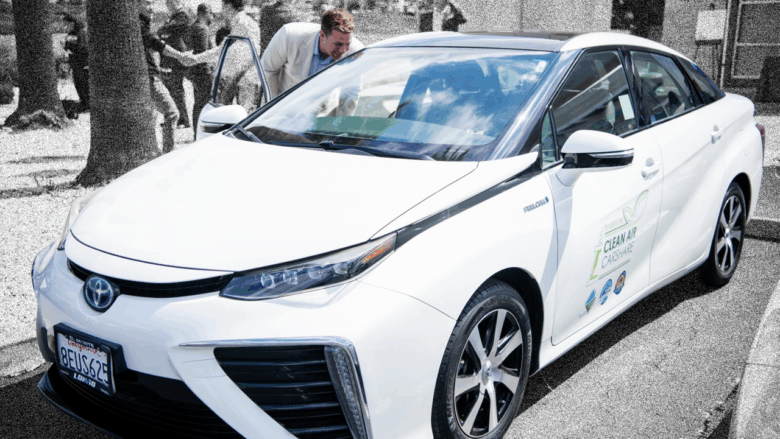
Riverside residents now have access to a new, eco-friendly transportation option through a hydrogen-powered car share program backed by UC Riverside and local partners. The Riverside Clean Air Carshare (RCAC) officially launched this month, offering a fleet of 13 Toyota Mirai sedans that run on hydrogen fuel cell technology.
The program, the first of its kind in the U.S., aims to increase access to clean, affordable transportation in the region while supporting California’s push toward zero-emission vehicles.
Unlike traditional gas-powered cars, hydrogen fuel cell vehicles generate electricity through a chemical reaction between hydrogen gas and oxygen—producing only water vapor as a byproduct.
“This program brings a double emissions benefit,” stated Matthew Barth, associate dean for research at UCR’s Bourns College of Engineering, in an announcement. “Carsharing systems reduce how many miles people drive by consolidating vehicle use—and now those shared cars are also zero-emission.”
The project received a $1.5 million grant from the California Air Resources Board (CARB) to support its rollout. The vehicles are maintained and fueled by Mobility Development Operations (MDO), a company that runs carshare services in 14 states.
To make the service user-friendly, MDO ensures the cars are pre-fueled and ready to go. Residents can reserve a vehicle using the MDO Carshare app, pick it up from one of several designated spots, and pay by the hour. Rates start at $9 per hour, or $6 per hour for qualifying low-income users enrolled in programs like SNAP, WIC, or Medicaid. A one-time $20 application fee covers a driving record check.
Pick-up locations include: UCR’s Center for Environmental Research and Technology (CE-CERT) at 1084 Columbia Ave, Casa Blanca Library, 2985 Madison St, and coming soon to UCR’s main campus in Parking Lot 1.
Additional sites are planned for the Eastside, Downtown, Arlanza, and La Sierra neighborhoods.
The initiative also serves as a “living laboratory” for researchers at UCR’s CE-CERT. By collecting anonymized data on trip lengths, fuel use, and rider demographics, they hope to measure the environmental and social impact of the program—and provide training opportunities for engineering students.
“We’re using real-time data to understand how programs like this can reduce greenhouse gas emissions and increase transportation equity,” stated Peng Hao, CE-CERT researcher and adjunct professor.
The long-term vision, Barth added, goes beyond hydrogen.
“As the system grows, we may add battery electric vehicles or other clean technologies,” he said. “The goal is reducing vehicle miles traveled and promoting clean mobility—no matter what powers the car.”
Residents interested in joining the program can find more information at here.