


Overview:
Following a California Supreme Court ruling against Riverside County Sheriff Chad Bianco for seizing over 650,000 ballots, experts held a forum to discuss election security. Panelists emphasized that while California's voting systems remain secure due to strict chain-of-custody rules, misinformation poses a significant threat to voter trust. Ahead of the upcoming November election, officials encouraged residents to rely on verified information and local reporting.
Aryana Noroozi
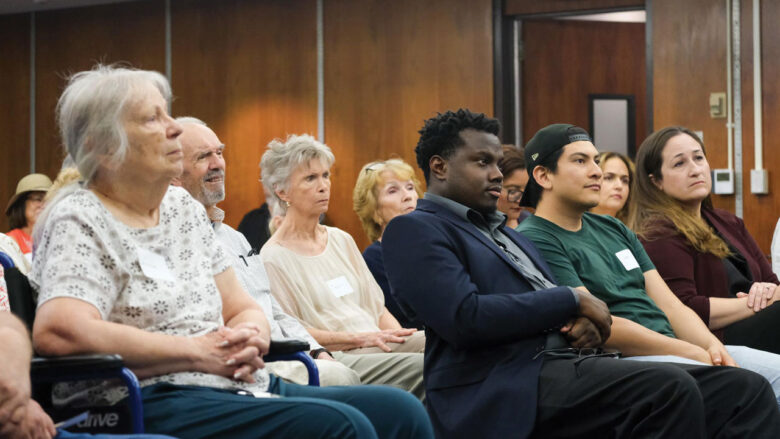
Just hours after the California Supreme Court ruled that Riverside County Sheriff Chad Bianco broke state election law when he seized more than 650,000 ballots, residents gathered at The Cheech Museum in downtown Riverside to uncover what the ruling means for their votes this November.
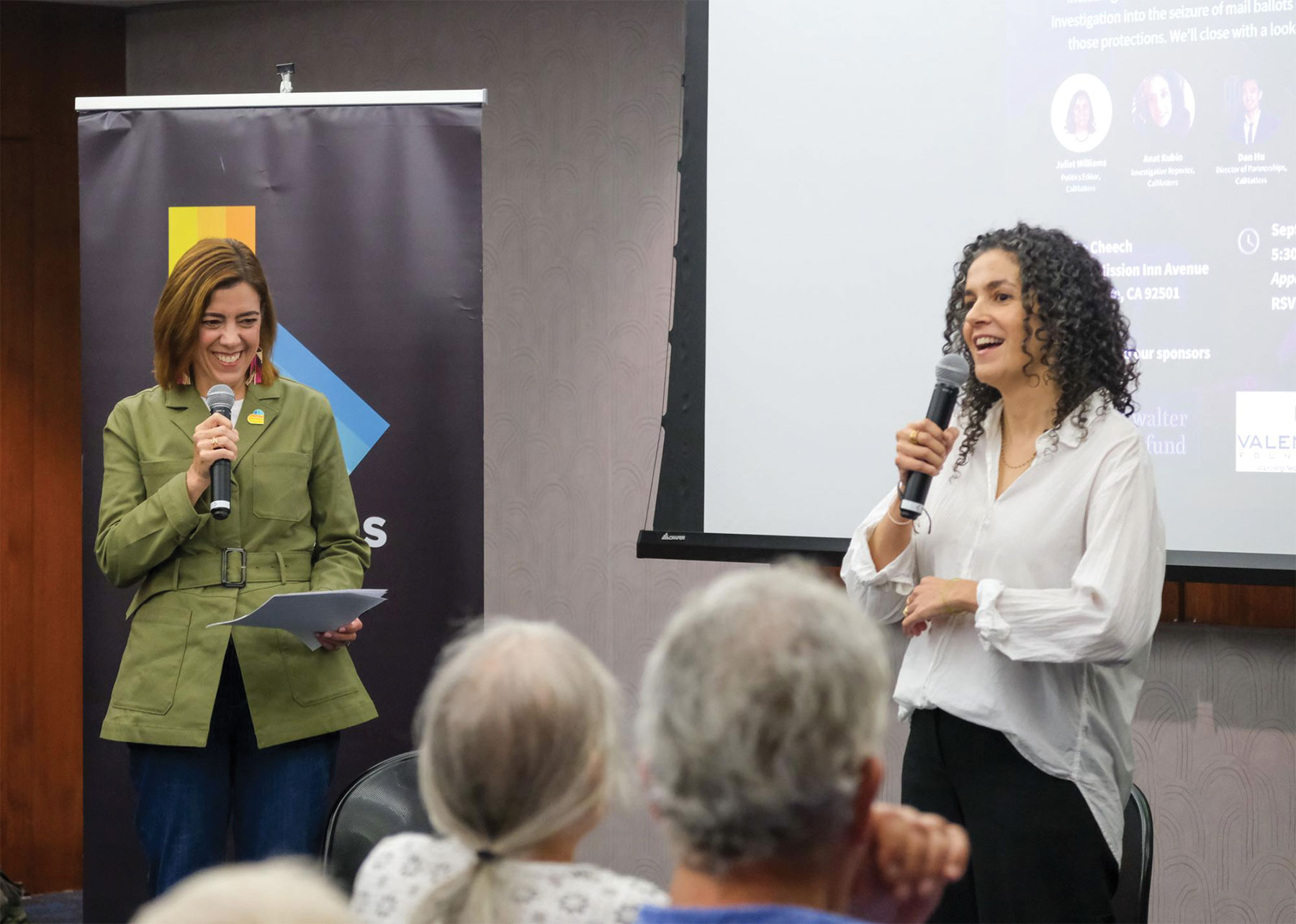
The Forum, “Where Are Riverside County’s Ballots and How Secure Are Its Elections?,” was hosted by CalMatters and the UC Riverside School of Public Policy. Just six weeks before a midterm election that includes a closely watched congressional race in Riverside County, the forum brought together the reporter who investigated the seizure and two researchers who study voter trust.
What they shared was that California’s elections are secure, but the bigger danger that keeps people from the polls is misinformation.
“Almost no evidence”
CalMatters investigative reporter Anat Rubin opened the evening by tracing how the seizure came to be. In a conversation with CalMatters politics editor Juliet Williams, Rubin said the seizure of roughly 1,500 boxes of ballots from the November 2025 Proposition 50 special election followed an audit by a group of residents calling itself the Riverside Election Integrity Team. The group interpreted registrar records to mean more votes were counted than received. The registrar said the group misread the data.
Rubin and co-writer Jessica Pishko traced the roots back further, to an investigation Bianco’s office opened in 2022 at the urging of a loose coalition of residents alleging voter fraud, including claims that electronic voting machines had been hacked.
“There was almost no evidence to support all of these claims. They were all over the map,” Rubin said, listing allegations that dead people were voting and teenagers were receiving ballots.
Rubin said the sheriff’s investigator assigned to the case quickly closed it, finding no evidence of a crime. The investigation was later reopened. As it grew larger, it ultimately led to the seizure.
Emails obtained by CalMatters showed Bianco privately dismissing some of the claims as ridiculous, even as his office pressed forward, Rubin said.
“Some of the sort of maybe ideologically aligned public officials didn’t actually believe some of the claims that this group was making, and that didn’t stop any of this,” she said.
A judge signed the search warrant. Attorney General Rob Bonta twice ordered Bianco to stop, and the sheriff refused, Rubin said. The dispute reached the state Supreme Court, which ruled Thursday unanimously that voted ballots must stay in the custody of elections officials and ordered them returned to the Riverside County Registrar of Voters.
“Allowing law enforcement unfettered access to ballots … itself creates a substantial risk to election integrity,” Chief Justice Patricia Guerrero wrote, according to CalMatters’ coverage of the ruling.
Rubin said the case matters beyond California because Bianco has aligned himself with the “constitutional sheriff” movement, whose members consider themselves the final authority in their counties and which has taken up voter fraud claims since 2020. The ruling, she said, appears to say that “at least here, that’s not the case.”
New laws with “real, real criminal consequences”
Jennifer Gaudette, an assistant professor at the UC Riverside School of Public Policy, said the court repeatedly pointed to California’s strict chain-of-custody rules for ballots.
“The state has actually very strict laws about how ballots can be treated,” she said.
On its own, Gaudette said, the ruling carries no penalty for the sheriff. What gives her more confidence heading into November is a package of election bills Gov. Gavin Newsom signed last week, including one that makes it a felony to seize ballots, election records or voting equipment from election officials.
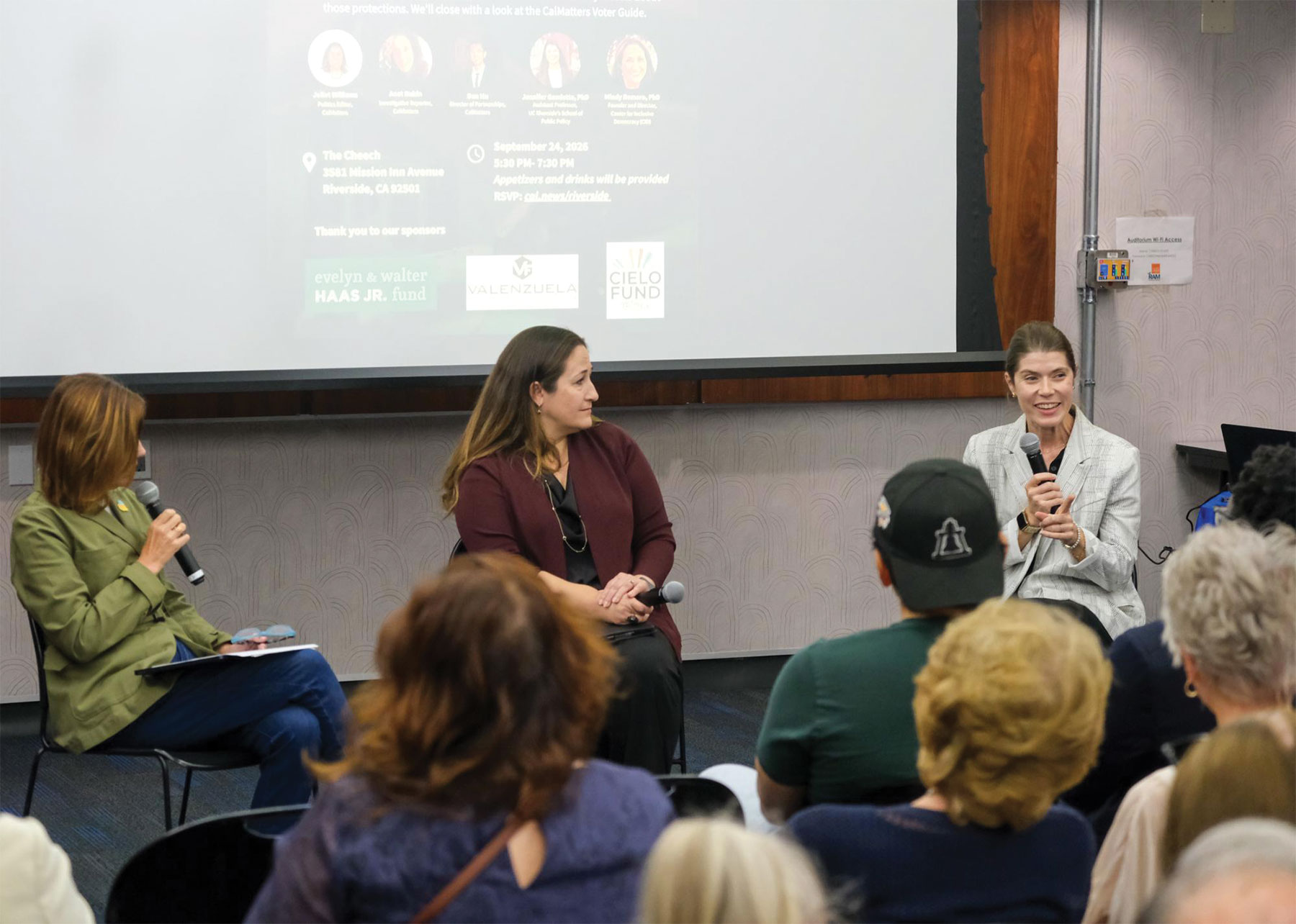
“If somebody wants to pull a political stunt or make a name for themselves or something like that, they’re going to have real, real criminal consequences behind that kind of a move,” she said.
Gaudette also addressed a common fear about voting machines. By California law, she said, no voting machine can connect to the internet.
“These are not machine-dependent systems; they’re actually human-dependent systems with so many rules surrounding the human,” she said, pointing to audits, hand counts, bipartisan observers and a requirement that at least two people handle ballots at all times. Anyone can ask their county registrar for a tour and watch ballots being counted, she added.
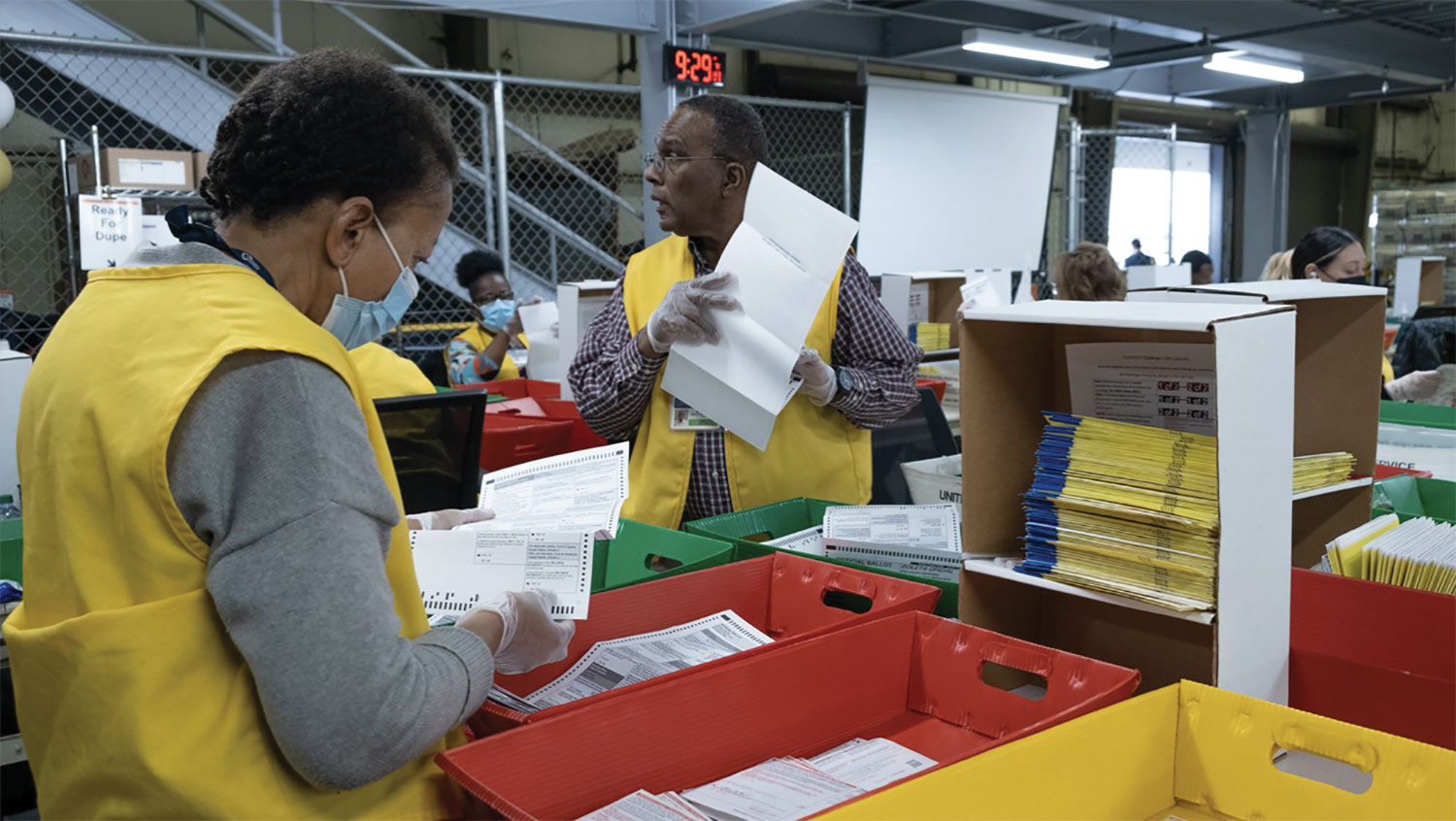
Asked by an audience member whether a seizure could expose how individual residents voted, panelists said ballots are separated from their signed envelopes once processed, so seized ballots that had already been counted could not be traced to a voter. Seizing them still breaks the post-election chain of custody, said Mindy Romero, founder and director of the Center for Inclusive Democracy.
Prop. 39 and voter ID
The forum concluded with a preview of the CalMatters Voter Guide led by Dan Hu, CalMatters’ director of partnerships, who walked attendees through several of the 14 statewide measures on the November ballot, with the most time spent on Proposition 39.
Prop. 39 would require voters to show government-issued identification at the polls and require mail voters to provide the last four digits of a government ID number, such as a driver’s license. It would also direct election officials to verify that all registered voters are U.S. citizens, according to a CalMatters explainer video shown at the event.
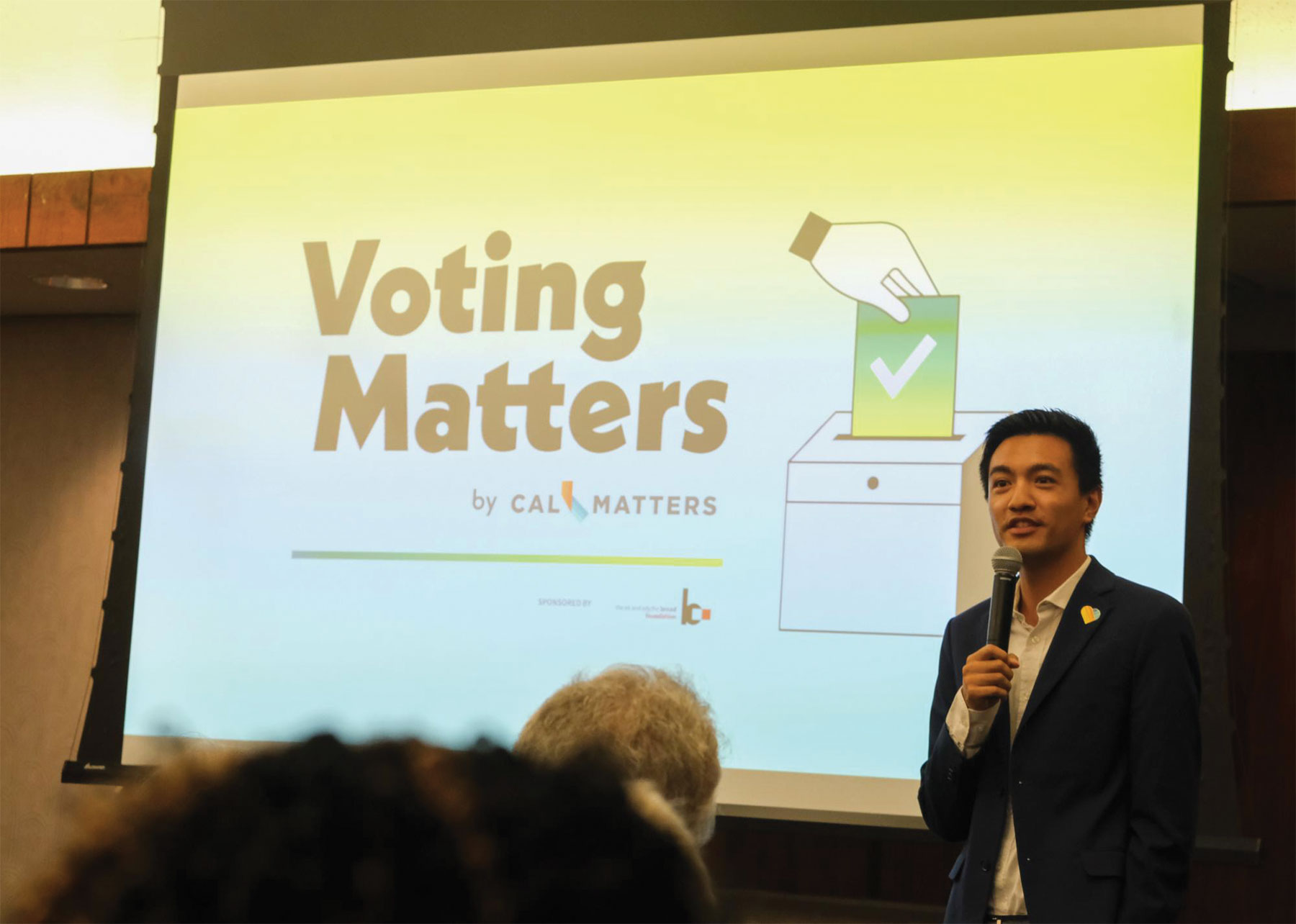
Supporters say ID rules would build trust in California elections and note that most states already require some form of identification. Opponents say the measure would make it harder for eligible voters without a driver’s license or supporting documents to cast a ballot, disproportionately affecting people with disabilities, low-income voters and those who have recently moved.
California already requires an ID number or the last four digits of a Social Security number to register, but does not ask voters for ID at polling places.
The real threat: lost trust
For Romero, the greatest risk to November’s election is not fraud but what false claims do to voters’ confidence.
“We do have free and fair elections,” she said. “The biggest threat is misinformation, voter confusion, and then of course overall, what it does to the levels of trust that voters have.”
She said there is “no widespread or significant level of voter fraud in the United States, and not in California, and not in Riverside,” and that trust in the electoral process is at all-time lows, driven largely by rhetoric from President Donald Trump.
Romero said mail ballots are protected by signature verification, and voters who forget to sign or whose signature doesn’t match get a chance to fix, or “cure,” it. Her advice to anyone wondering whether to vote at all: “Getting your vote out, no matter how you’re going to vote, is the best way to make sure you’re heard. That you don’t let your vote be taken from you because of that misinformation and disinformation.”
Why California counts slowly
California counts mail ballots that arrive up to seven days after Election Day if they are postmarked on time. Romero said those late arrivals are a small share and are not what slows results.
“The slow vote count is because we have millions and millions of votes by mail ballots, and we have a process to ensure that there is not fraud,” she said. That slow count, Romero added, “is really used as evidence, right, that there is fraud, right, when it actually is the exact opposite.”
Gaudette, who co-authors research with Romero, said she would like to see counties move with more urgency. “People deserve to know the outcome of their election sooner than two or three weeks later,” she said. But both agreed the core problem is money and staffing. “The way we vote has significantly changed, but the resources have not significantly changed,” Gaudette said.
Explain, don’t just reassure
Asked what residents can do about misinformation in communities with few local news outlets, Gaudette shared findings from her research with UC San Diego. In experiments, a casual social media-style video she recorded in her car explaining election safeguards was about as persuasive as a polished video from a county elections office.
“You shouldn’t tell people elections are secure. You should explain how they are kept secure, and that is what increases people’s trust in elections,” she said. “You have the power to record a video and put it on social media, tell your friends and share the facts.”
Hu offered his own answer to the question: “Support your local publication, the people doing the real work out there reporting.”
Key dates for November
Hu urged voters who plan to mail their ballots to do so early. He said Santa Barbara County has seen a 400% increase in rejected ballots because mail is now routed through a U.S. Postal Service processing facility in Santa Clarita, about 100 miles away, delaying delivery.
- Oct. 5: Counties begin mailing ballots
- Oct. 19: Last day to register to vote (same-day registration is available in person with a provisional ballot)
- Oct. 27: Last recommended day to mail your ballot
- Nov. 3: Election Day
The CalMatters Voter Guide includes candidate profiles, campaign finance data, proposition quizzes, and short “Props in a Minute” videos. Voters can also check whether their ballot was received and counted through the state’s free BallotTrax service, or call the Riverside County Registrar of Voters to arrange a tour of the counting center.