


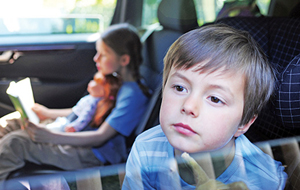
Loma Linda University Children’s Hospital and Safe Kids Inland Empire are urging parents and caregivers to be aware of the dangers of leaving children unattended in a vehicle. As summer approaches and temperatures rise, the threat of heatstroke increases when a child is left in a hot car. Already in 2014, seven kids have died of heatstroke in the United States after being left in or playing in a car while unattended.
“These tragedies are absolutely heartbreaking and a reminder for all of us to be aware of the dangers of leaving a child alone in a car,” said Michelle Parker, coordinator, Safe Kids Inland Empire. “Many people are shocked to learn how hot the inside of a car can actually get, and cracking the window doesn’t help. That’s why Safe Kids is asking everyone to help protect kids from this preventable tragedy by never leaving a child alone in a car, not even for a minute. Bystanders can also help by calling 911 if they see a child alone in a car.”
It doesn’t have to be the middle of the summer for a child to get overheated. Even with seemingly mild temperatures outside, the temperature inside a car can rise 20 degrees in as little as 10 minutes. A child’s body heats up three to five times faster than an adult’s, making them more susceptible to heatstroke.
Heatstroke, also known as hyperthermia, is the leading cause of non-crash, vehicle-related deaths for children. “Hyperthermia occurs when the body isn’t able to cool itself quickly enough and the body temperature rises to dangerous levels,” said Shamel Abd-Allah, MD, chief of pediatric critical care at LLUCH. “Young children are particularly at risk as their bodies heat up three to five times faster than an adult’s. When a child’s internal temperature gets to 104-105 degrees, major organs can begin to function abnormally, and when that child’s temperature reaches 107 degrees, the child can die.”
Together, the community can reduce the number of heatstroke deaths and near misses by remembering to ACT:
A: Avoid heatstroke-related injury and death by never leaving your child alone in a car, not even for a minute. And make sure to keep your car locked when you’re not in it so kids do not get in on their own.
C: Create reminders by putting something on the backseat of your car next to your child such as a briefcase, a purse or a cell phone that is needed at your final destination. This is especially important if you’re not following your normal routine.
T: Take action. If you see a child alone in a car, call 911. Emergency personnel want you to call. They are trained to respond to these situations. One call could save a life.
To learn more heatstroke safety tips, visit: www.safekids.org/heatstroke.