


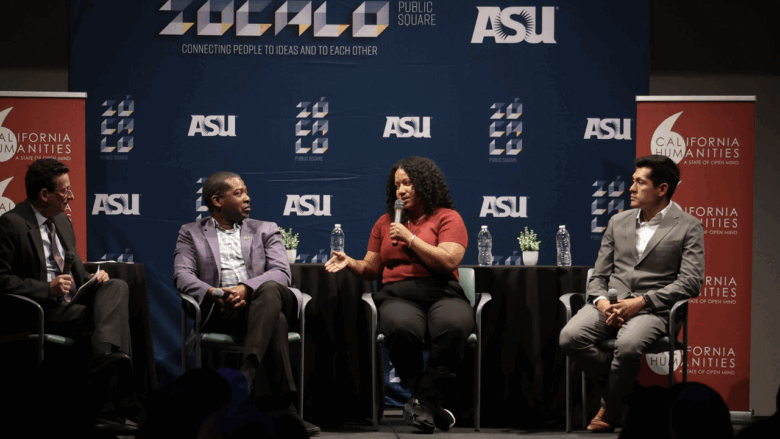
Overview: A panel discussion in Riverside, California, addressed the rise in hate crimes and the need for anti-racist institutions to combat racism. The panelists discussed the importance of reporting hate crimes and emphasized the need for oversight for mandated hate crime reporting. They also highlighted the need for self-reflection and unity to overcome the common oppressor. The event was hosted by Zócalo Public Square in partnership with California Humanities, the National Endowment for the Humanities, United We Stand, University of California, Riverside (UCR) ARTS, and the UCR College of Humanities and Social Sciences.
Breanna Reeves
Dozens of residents, community advocates and concerned stakeholders filled the room in downtown Riverside on July 16, eager to hear the speakers answer questions central to the panel’s theme, “How does the Inland Empire strike back against hate?”
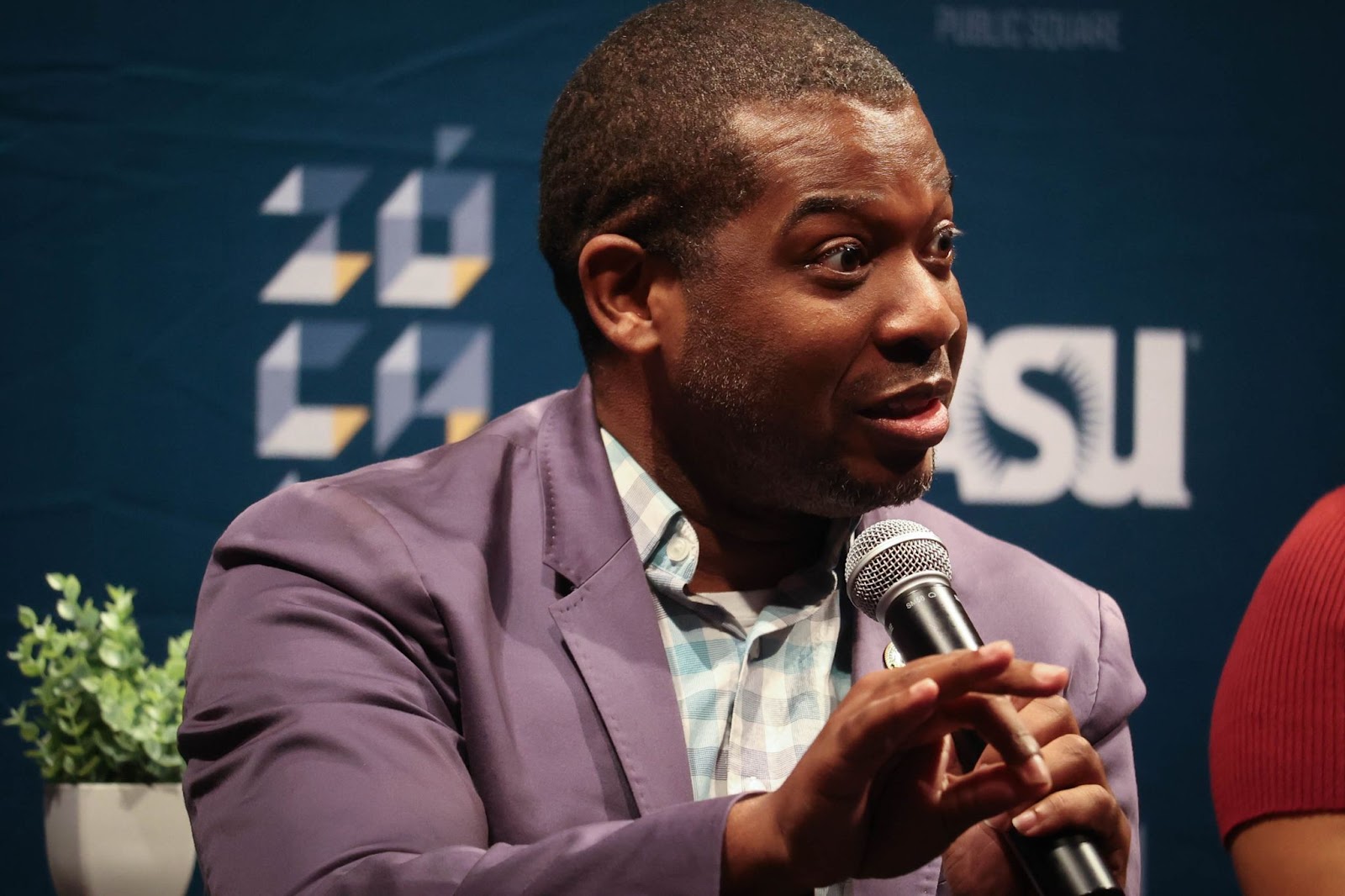
“We need to continue to have people speak up forcefully against it — every time that it happens,” Assemblymember and panelist Dr. Corey Jackson answered. “Also, it’s time for us to start building anti-racist institutions so that we can make sure that we institutionalize anti-racist systems, knowledge, training and advocacy.
Moderated by Brian Levin, professor emeritus at California State University, San Bernardino’s (CSUSB) School of Criminal Justice and founder of the Center for the Study of Hate and Extremism, he dove into the topic of the rise in hate crimes, especially with the 2024 Presidential Election looming.
Hate crimes are defined as crimes motivated by bias against race, religion, national origin, sexual orientation, gender, gender identity or disability. A hate incident is described by the California Department of Justice as an action or behavior motivated by hate, but is not a crime, such as insults or posting hate material.
A recent report from The Leadership Conference Education Fund called “Cause for Concern 2024: The State of Hate,” noted that a pattern has emerged over the last four presidential campaign cycles: reported hate crimes increase during elections.
Reported hate crimes in California decreased by 7% from 2022 to 2023, according to the state’s 2024 report. The report emphasized the increase in reported hate crimes against LGBTQ+, Jewish and Muslim communities. Transgender “bias events” increased by 10% between 2022 and 2023 and anti-LGBTQ+ bias events increased by 86%.
While the report noted a decrease in reported hate crime events and hate crime offenses, panelist Candice Mays, project director of Mapping Black California, Black Voice News’ data journalism unit, addressed flaws in the practice of reporting hate crimes.
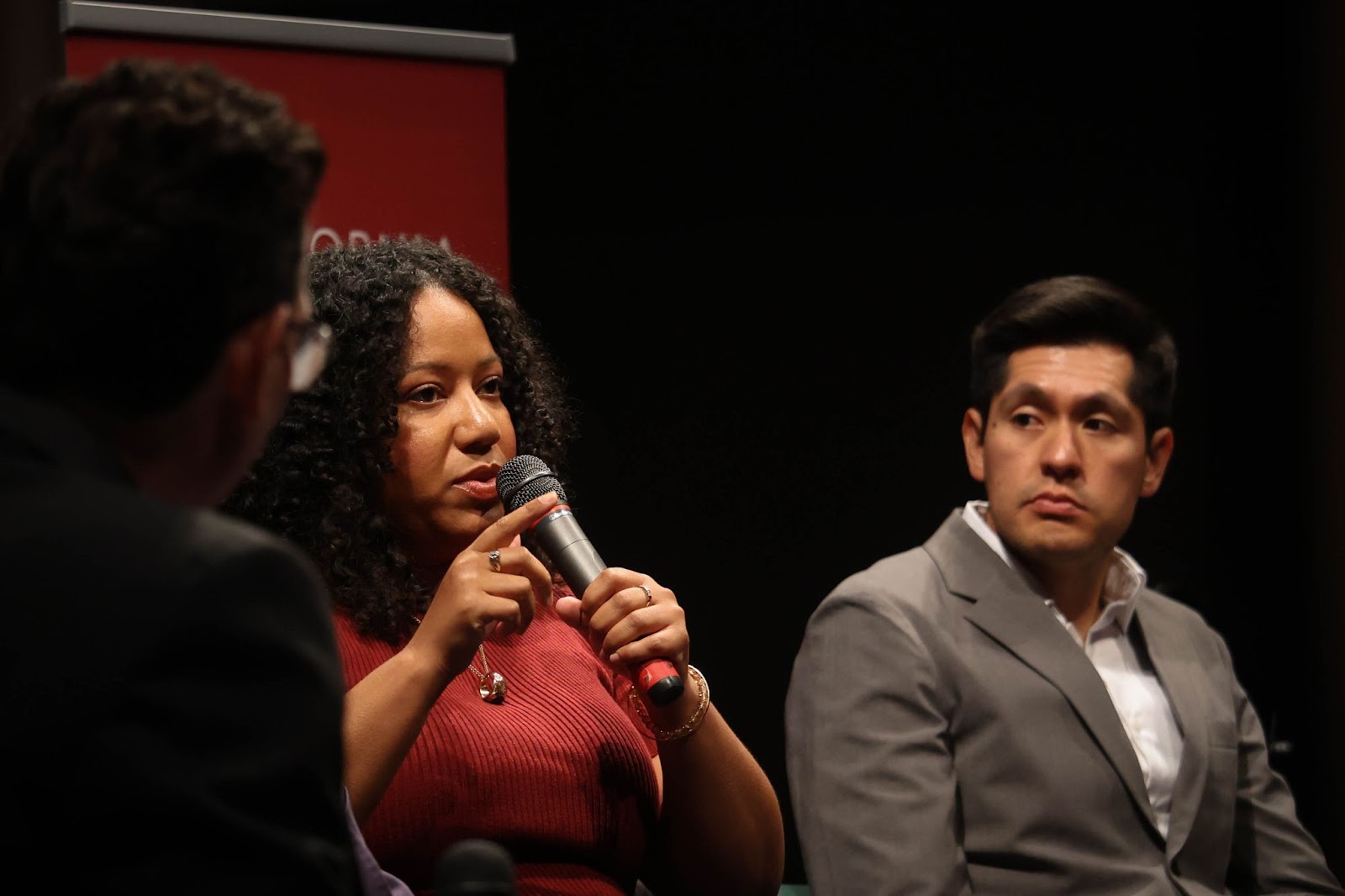
“I think the first hurdle to reporting hate crimes is: How do you tell the police, on the police?” Mays asked. Oftentimes hate crimes are not reported to or by law enforcement agencies, or are missing details that would classify a crime as a hate crime such as identifying race or gender in a report. In 2022, the Riverside County Sheriff Department reported one hate crime event and two hate crimes offenses to the state.
While law enforcement agencies are mandated to report hate crimes and hate-related incidents that include violent interactions with law enforcement themselves, Mays explained that there are several obstacles that prohibit these incidents from being reported: Hate crimes and hate-related incidents are not always easily identified and the way hate crimes are identified needs to be advanced. Mays also emphasized the need for oversight for mandated hate crime reporting.
For advocates and leaders in the Inland Empire, fighting back against hate also means calling out discriminatory practices like in the case of a 2018 federal lawsuit filed by the American Civil Liberties Union (ACLU) against Riverside County over the Youth Accountability Team (YAT) program. Dr. Jackson, the CEO of Sigma Beta Xi, a mentorship organization, was a plaintiff in the lawsuit.
Overseen by the Riverside County Probation Department, YAT was marketed as a mentorship program to address juvenile crime and delinquency, but the lawsuit alleged that the program created a school-to-prison pipeline by allowing adolescents to be referred to the program by teachers and put on probation for “normal, childish behavior.”
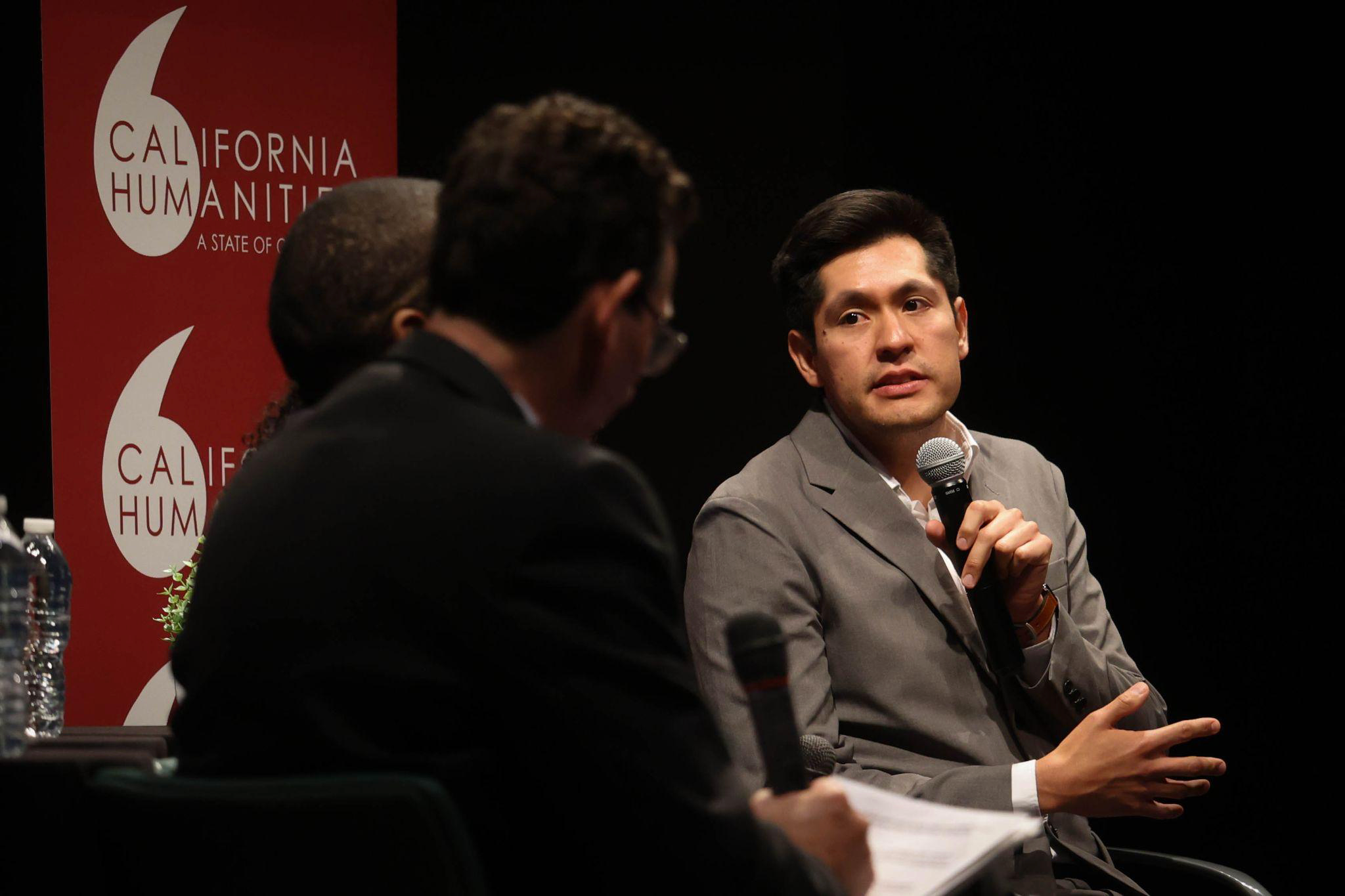
Luis Nolasco, a panelist and ACLU Southern California senior policy advocate and organizer, who worked with Dr. Jackson on the lawsuit, explained how challenging it was to see Black and brown kids discriminated against and not fully supported by their teachers.
Nolasco also addressed anti-immigrant hate crimes and sentiments that have continued to prevail, fueled by former President Donald Trump’s racist rhetoric, stereotypes and ignorance.
“The hate comes from lack of knowledge or interfacing with the group,” Nolasco explained, referring to immigrant populations. “A lot of people have these terrible views of immigrants and a lot of that can be solved by actually talking to a person that’s an immigrant.”
As hate crimes against different racial, ethnic, religious and gender groups increase and decrease over the years, reported hate crimes have remained highest and most prevalent against Black people since national data was collected in 1990.
As Dr. Jackson recognized how hate crimes ebb and flow, with different groups being targeted, he stressed, “The idea is that we are all on the menu. It depends on what the dish of the day is. As a matter of fact, this is starting to become a buffet when it comes to hate.”
With this knowledge, Dr. Jackson described the importance of banding together to overcome the common oppressor. Fighting back against hate begins with the realization that the oppressor encourages hate among marginalized groups to stay in power. It will also take self-reflection to not buy into that hate.
Nolasco shared that allyship and advocacy looks different for everyone, but it begins with bold actions, beyond donating money to a cause.
“Not one community is going to be on the forefront by themselves. We, all [of us] here, have multiple identities, different facets of our life that are under attack. We need to hold each other in community and hold the line,” said Nolasco.
To learn more about how the panelists fight back against hate in the Inland Empire, watch the full conversation here.
“I’m happy that we’ve been able to create this space, but more importantly, that the space was filled by the community,” said Daryle Williams, dean of UCR’s College of Humanities, Arts and Social Sciences. “I’m also hopeful that they’ll take it back to wherever their spaces are, in their domestic lives, their professional lives and their spiritual lives.”
The event was hosted by LA-based organization Zócalo Public Square, a unit of Arizona State University Media Enterprise, in partnership with California Humanities, the National Endowment for the Humanities, United We Stand, University of California, Riverside (UCR) ARTS, and the UCR College of Humanities and Social Sciences.