


Gail Fry |
Civil Rights Attorney Charles Bonner is one of the attorneys who successfully represented former San Bernardino County Department of Family and Children’s Services (SBC-DFCS) Social Worker and whistleblower, Eric Bahra, in his lawsuit against the county.
As recently reported by the IE Voice and Black Voice News, Bahra fought back against retaliation taken against him by SBC-DFCS for exposing a cover-up of the county’s placement of 59 foster children in the home of a known sexual abuser despite his foster care license being suspended. When the case settled, Bahra was awarded 2.5 million dollars.
The beginning of Bonner’s civil rights journey
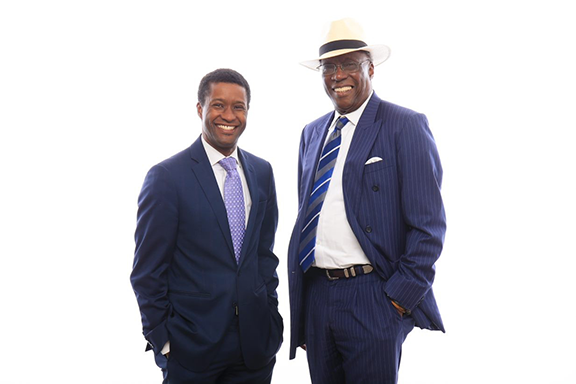
Fighting for justice has been a lifetime mission for Attorney Charles Bonner, whose son, A. Cabral Bonner, also an attorney, works with him in his practice. Charles said he was compelled into civil rights activism in 1963 when he was 16-years-old and living in his hometown of Selma, Alabama. According to Charles, it began when he and his friend, Cleo, were approached by Reverend Bernard Lafayette, founder of the Student Non-violent Coordinating Committee (SNCC).
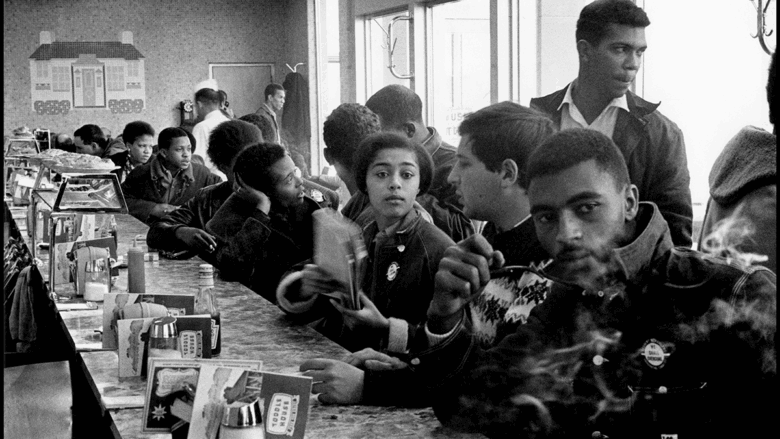
Lafayette told the young men he came to Selma to challenge the segregation of business establishments. He shared with them how through consistent and persistent organizing, and peaceful protesting those establishments–where protesters suffered physical threats, beatings, being spat on, having hot coffee poured on them, and being burned with cigarettes–they were ultimately successful in integrating Nashville, Tennessee.
Lafayette said he was there, in Selma, to organize the same activities and that they too, could change and integrate Selma through direct nonviolent action. He cautioned however, that they too, would be subjected to violence in order to accomplish this goal.
Bonner said his first reaction was that it was crazy to subject themselves to violence and not react in turn.

The turning point
Continuing the story, Bonner said Lafayette then asked them whether they knew about Mahatma Ghandi and/or Jesus Christ, noting that the reason they knew the names were that these were men of love, peace and non-violence, adding their names will live in history forever, while the names of their killers would fade as they were men of evil and violence.
That was a game changer for Charles as it represented a spark of hope. Lafayette asked Bonner and his friend, Cleo, to recruit their fellow students and that their first task would be to register people to vote, as voting was a source of power. At that time, Black voters in Alabama had to pass a literacy test and pay a poll tax in order to register to vote.
After briefly conferring, Bonner said he and Cleo joined Lafayette in his mission to integrate Selma. Bonner wrote and published a book entitled “The Tip of the Arrow” about his experience of becoming a civil rights activist and his experiences with non-violent protest.
Today, Charles has a law practice in Sausalito, California with his son, A. Cabral.