


Overview:
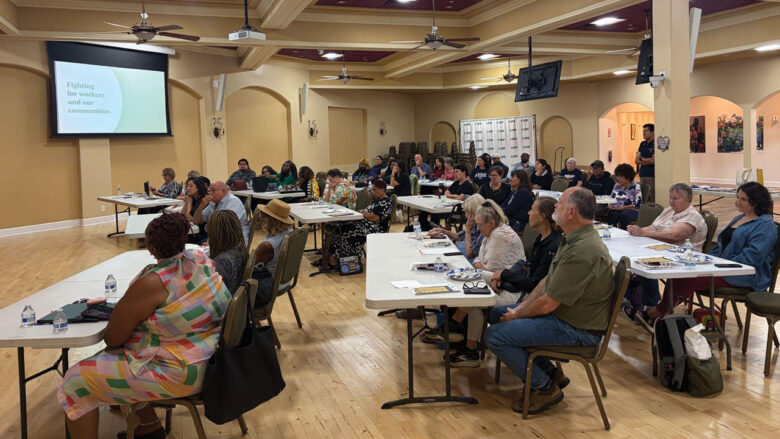
On October 5, 2026, the Democratic Rights Under Attack event took place in Riverside, featuring speakers from the Southern Poverty Law Center and the ACLU. Discussions focused on historical racism, recent legislative updates like the California Voting Rights Act of 2026, and local voting barriers. A panel including Supervisor Jose Medina addressed community concerns regarding hate groups and youth civic engagement.
Alyssah Hall
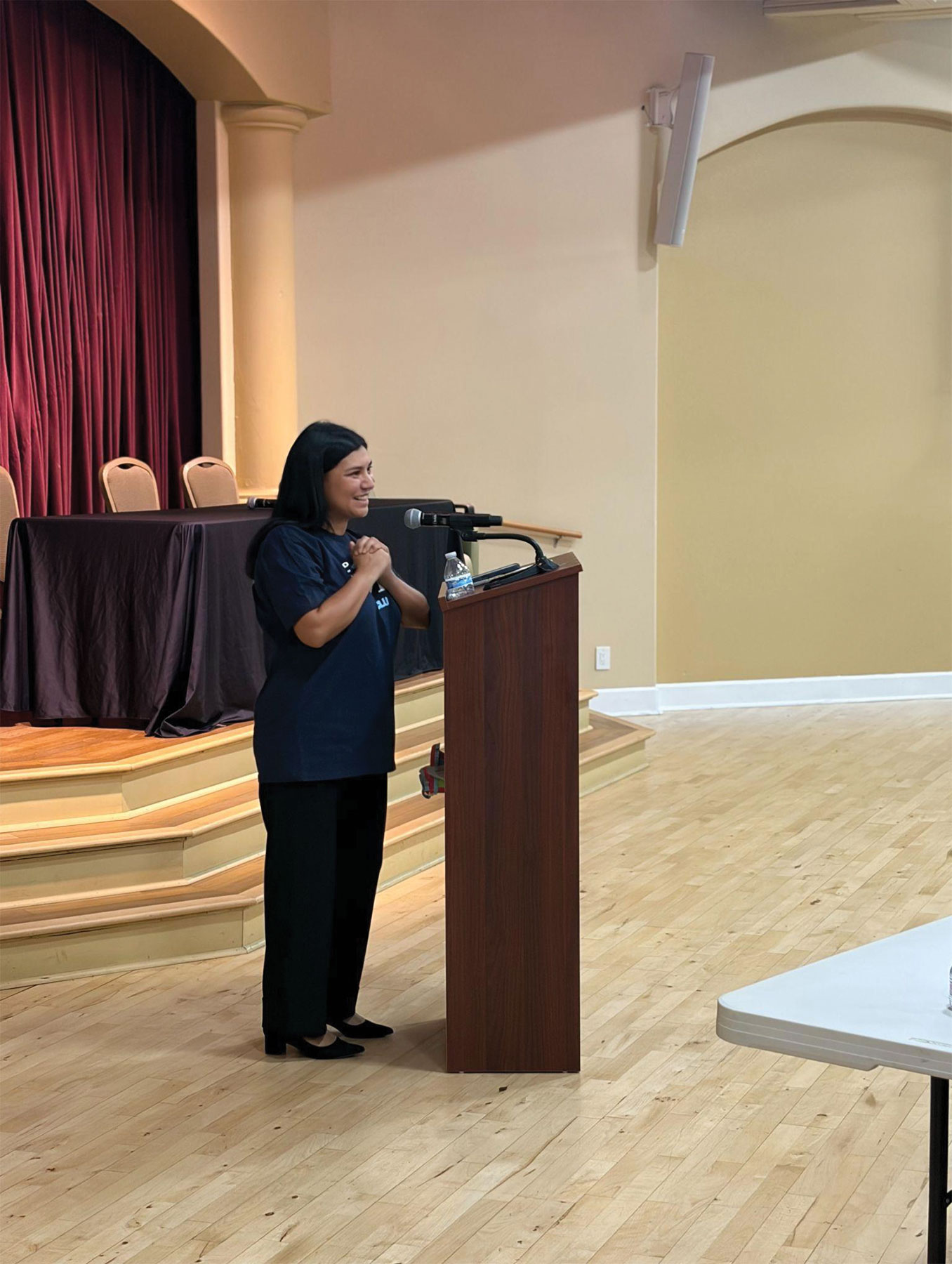
The “Democracy Under Attack: Securing Our Voting Rights” event was held at the United Domestic Workers (UDW) Labor Hall in Riverside on Oct. 5, 2026. This event focused on voting rights, racism, and the continued struggle for democracy and featured speaker Wakinyan Clanton, State Director of the Mississippi Chapter, Southern Poverty Law Center (SPLC). Riverside County Supervisor Jose Medina and Senior Staff Attorney with the American Civil Liberties Union (ACLU) of Southern California, Julia Gomez, were also featured in the community conversation along with a special virtual message from Senator Sabrina Cervantes.
Clanton served as a voice on the examination of the history of racism and voting rights in the American South and the challenges that continue to shape communities across the nation today. UDW District 3 Chair Desmond Prescott was also present and shared the importance of the gathering that day to discuss the barriers around voting, what’s on the ballot, the propositions, and what’s happening within the Inland Empire.
“Learning of some of the things that’s happened in Mississippi and bringing that knowledge to our region was phenomenal. It was insightful, and I am so happy that I have attended. So happy to be here, and I just can’t wait to share what I’ve learned here tonight,” Prescott said.
In the video message from Senator Cervantes, she shared that the California Voting Rights Act of 2026 (CVRA 2026), Senate Bill 1360 and Senate Bill 1164, which she authored, were signed into law by Governor Gavin Newsom on Sept. 18, 2026. The bills were added as an update to the original CVRA 2001. The purpose of the CVRA 2026 is to improve language access assistance to limited-English proficient voters in California and fight voter suppression or vote dilution in light of the U.S. Supreme Court weakening the federal Voting Rights Act of 1965.
Cervantes highlighted that she is also proud to have authored SB 73, which bars law enforcement from accessing or disrupting California ballots and voting systems, and SB 1418, which makes it a crime to take election material or voting technology from the custody of an election official and widens the types of material required for preservation if an election contest or criminal proceeding is ongoing. These bills were prompted by the Riverside County Sheriff Chad Bianco seizing and relocating more than 60,000 voted ballots in Feb. 2026 from the Nov. 2025 statewide special election on Proposition 50 from the Riverside County Registrar of Voters.
“I also want to thank you all for your support on SB 1379, which we are extremely excited that Governor Newsom signed into law, which now requires the Riverside County Board of Supervisors to separate the offices of county sheriff and coroner, establish an independent office of medical examiner, and create clearer requirements for reporting in custody deaths,” Cervantes said.
Following Cervantes’ message, Gomez emphasized the need for Cervantes’ California Voting Rights Act of 2026, that there are continued efforts across the country as well as in California to make it difficult for people to vote and undermine confidence in elections.
“Supervisor Medina flagged some of those efforts here in Riverside, but it’s also happening in places like Huntington Beach, which in 2024 passed a voter ID measure. Shasta County in June passed a voter ID requirement, an attack on vote-by-mail voting… There’s also Prop 39 that’s on the ballot that, if passed, would require voter ID all across the state,” Gomez said.
“These attacks are a reminder that the protections that we rely on cannot be taken for granted, and these protections were not won easily. Generations of Black Americans led the fight and organized, marched, and sacrificed in the face of Jim Crow and in a system designed to deny them political power, and despite these enormous barriers, they built a movement that led to the passage of the Voting Rights Act of 1965,” Gomez continued.
At the end of the night, a panel was held with Medina, Clanton, and Gomez to answer any written questions from the audience. One of the questions from the audience asked, “Can any of you describe efforts regarding hate groups in Riverside?”
“What I learned from my father is that every time we are confronted with hate and prejudice, we need to stand up to it, call it out. So I don’t know where the hate groups are, but when I see it, I recognize it, and I say something,” Medina answered.
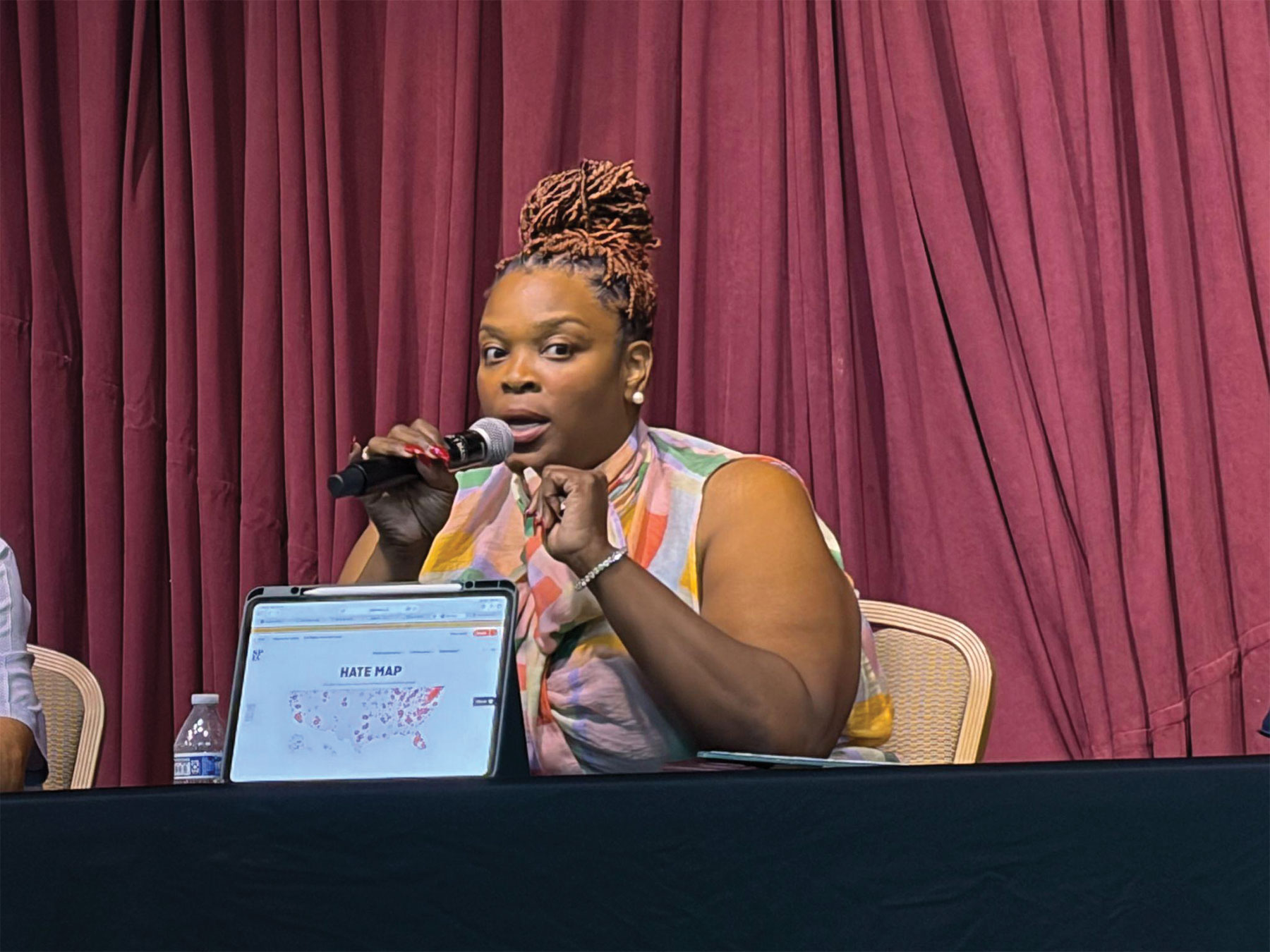
Clanton showed a “Hate Map” that is available on SPLC’s website, which shows a plotted map of the U.S. with how many groups per area are in a location and expands on what kind of group it is and when they were last active. The “Hate Map” is produced annually, coincides with SPLC’s year in hate report, and provides site goers with a detailed understanding of who is in their neighborhood. Clanton explained that SPLC can help to offer some resources to figure out what to do about the groups once they are discovered.
A few other questions asked about how to get the youth involved in voting and if there is a strategy for those who feel tired, jaded, traumatized, and “prefer to wait on heaven”?
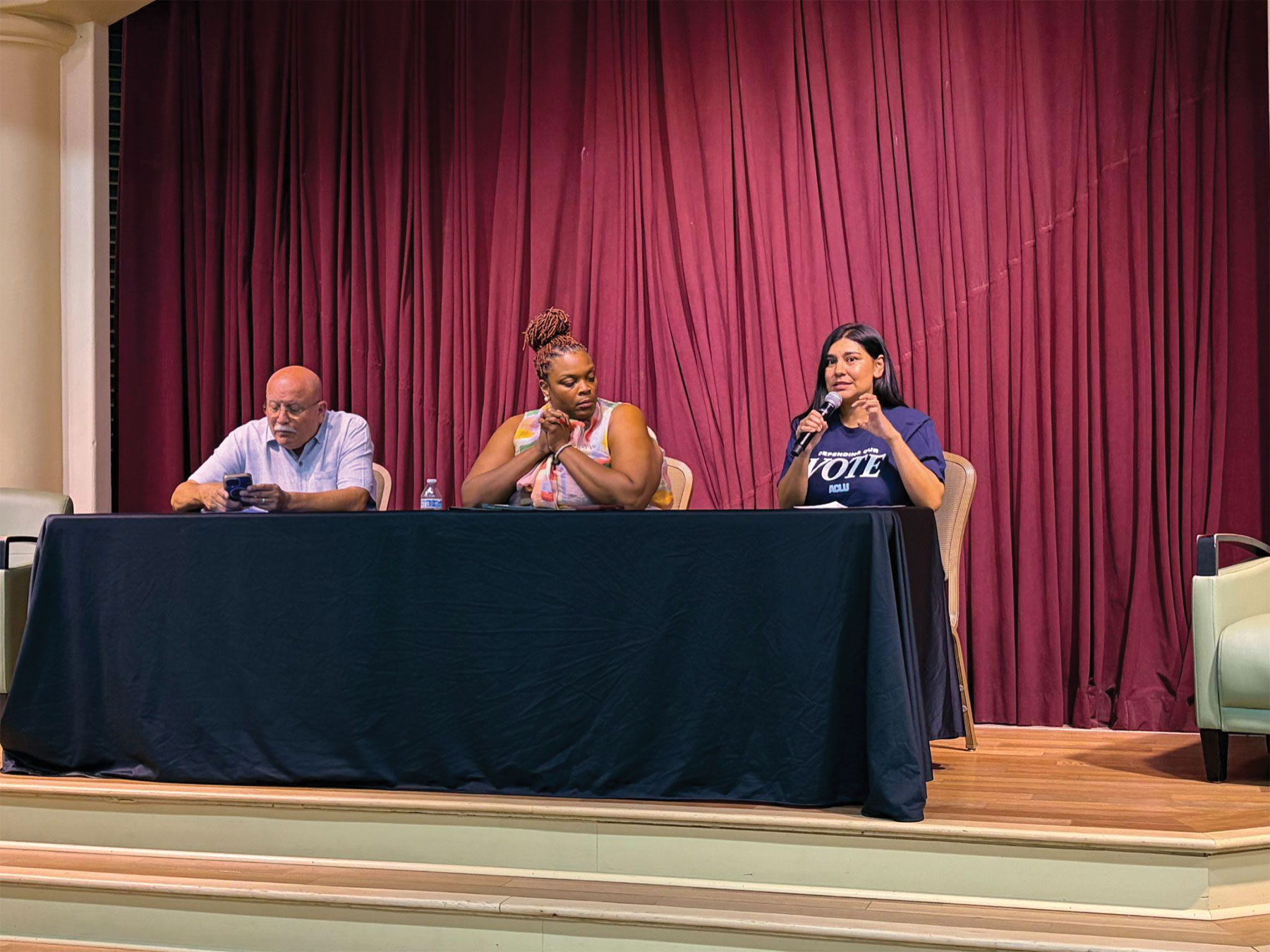
“There’s a big myth that young people don’t care…and what we’re seeing across the South is this beautiful, multi-generational, multicultural movement that is shaking things up, and it is countering this belief…You have to put your boots on the ground and tap into what the people are doing,” Clanton stated.
“My word tells me that faith without work is dead. Heaven is available to all of us should we just believe. But in order to see the fruits of your labor, you got to put some skin in the game. You got to do the work. We actually don’t have the luxury of waiting on heaven to fix something; God has already fixed it because he put you here to do it. You’ve got to believe in your power to be able to effectuate change,” Clanton shared.