



By Rory O’Sullivan
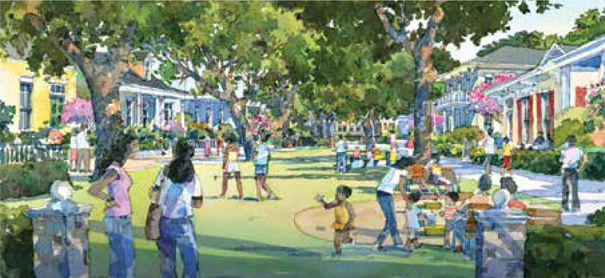
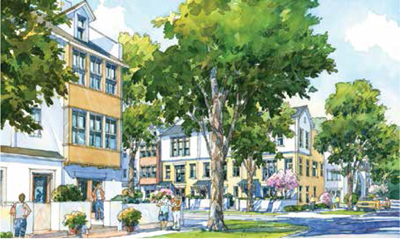
The Waterman Gardens redevelopment project is scheduled to replace 252 deteriorating low-income housing units built in 1943 with 411 modern units. The project will be a mix of market-rate rentals, income-restricted units and properties available for sale.
The project, in the works since early 2012 had to overcome negative sentiment from resident’s concerns about funding after the city declared bankruptcy and regulatory hurdles.
The total redevelopment cost will be an estimated $200 million according to Ana Gamiz, Policy and Community Affairs Director with the Housing Authority of the County of San Bernardino.
The HACSB is using developer National CORE to complete and manage the project once it is completed. The nonprofit has rehabbed complexes throughout the nation including San Bernardino and Orange Counties.
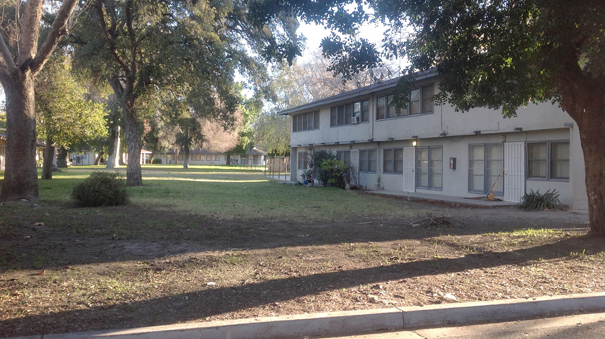
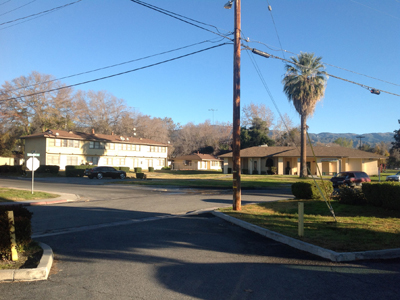
“Waterman Gardens Housing Community was built in 1943,” Gamiz said by email. “The complex has a number of deficiencies.”
Kim Carter who works to address housing issues in San Bernardino through her nonprofit Time for Change Foundation said the project is sorely needed, especially in San Bernardino.
“I’m really happy they selected San Bernardino,” said Carter. “As you can see there hasn’t been any major development here in 10 years.”
HACSB and National CORE are hoping the project can be a catalyst for change for the area.
They want to “create opportunity” by moving people from dependency to self-sufficiency by developing the skills they need to move themselves and their families forward.
 Those skills will include job training, ESL classes, parenting classes, financial literacy and career upward mobility skills according to National CORE spokesman Steve Lambert.
“People [should] have affordable housing,” said Lambert.
Lambert said it’s also important for people to have safe clean environments to raise families and communities like the redevelopment of Waterman Gardens, “it instills pride in communities.”
The total number of units at Waterman Gardens will be 411 with 252 affordable units, 74 senior units, 47 market rate units and 38 homes available for purchase.
The project will be done in five different phases, with the first 75 units breaking ground February.
Lambert said the project was being done in phases to, “make sure nobody is permanently or temporarily displaced.” The goal according to Lambert is, “to reduce disruption to residents daily lives,” by keeping current residents in the same neighborhoods and their children in the same schools.
 The redevelopment is expected to be completed in 2018 with the first homes available for lease in 2016.
“A well-maintained, attractive, and modern project inspires a sense of community, even if the residents are identical to the previous residents,” said Bill Watkins executive director of the Center for Economic Research and Forecasting at California Lutheran University, who completed the economic impact report for the project.
Watkins expects the project to generate a minimum of $81 million and create 1000 jobs for the San Bernardino area.
Business owner and community activist, Deanna Adams, said the city should be focused on creating affordable homes for the middle class.
“We have enough low income homes,” said Adams.
She said the money could be better spent on crime prevention and better schools.
“It has nothing to do with an economic boom,” said Adams.
 Adams is also concerned programs that help all residents such as the Waterman Gardens Head Start preschool which serves 60 students will not come back. The Valencia Grove housing project in Redlands Head Start did not come back at the end of its renovations.
Gamiz could not confirm what, if any services would be lost.
Lambert said National CORE would not leave any residents behind and that residents will be, “happy,” with the project and the services it provides once it is completed.
Lambert said National CORE will do everything in it’s power to ensure Waterman Gardens doesn’t go back to it’s crime ridden history in the 1990s where there was constant gang violence and drug sales being made out in the open.
Lambert said they are working closely with Mayor Carey Davis’s office and law enforcement and will have onsite management to ensure the community is a crime free positive place for residents.
“The Waterman Gardens presents the possibility of ending the vicious cycle and replacing it with a virtuous cycle,” said Watkins. “If it does, the economic impacts could be very large and non-economic impacts even larger.”
Artist renderings courtesy of National CORE