



Aryana Noroozi |
Dr. Dawn Wright made history this summer becoming the first Black person to descend to the deepest known point in the earth’s seabed, a trench known as the Challenger Deep. To complete the dive, she traveled from her home in Redlands to the Mariana Trench, a territory of the Federated States of Micronesia, in the western Pacific Ocean.
Wright says that the Challenger Deep is important for the region, particularly its’ home Palau, a nation of over 500 islands. “A lot of people in Palau don’t realize that they have this deep ocean trench within their territory. It would be like those of us here in the U.S. not realizing that we had a Grand Canyon.”
As the Challenger Deep “generates excitement and knowledge” for Palau, Wright says she sees a parallel between it and dives to the wrecks of African slave ships.
“African and Black people can get a sense of that history, as painful as that history is… It’s a beautiful project in terms of discovering and claiming that history,” she offered.
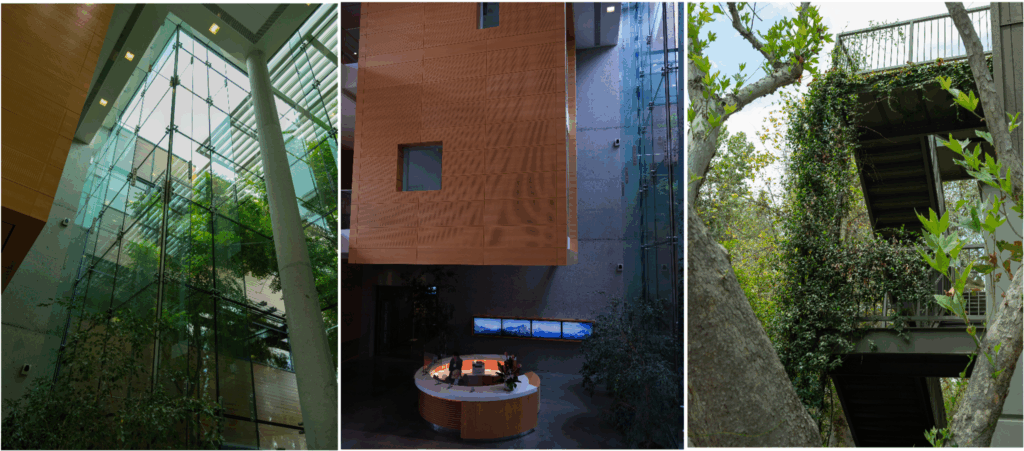
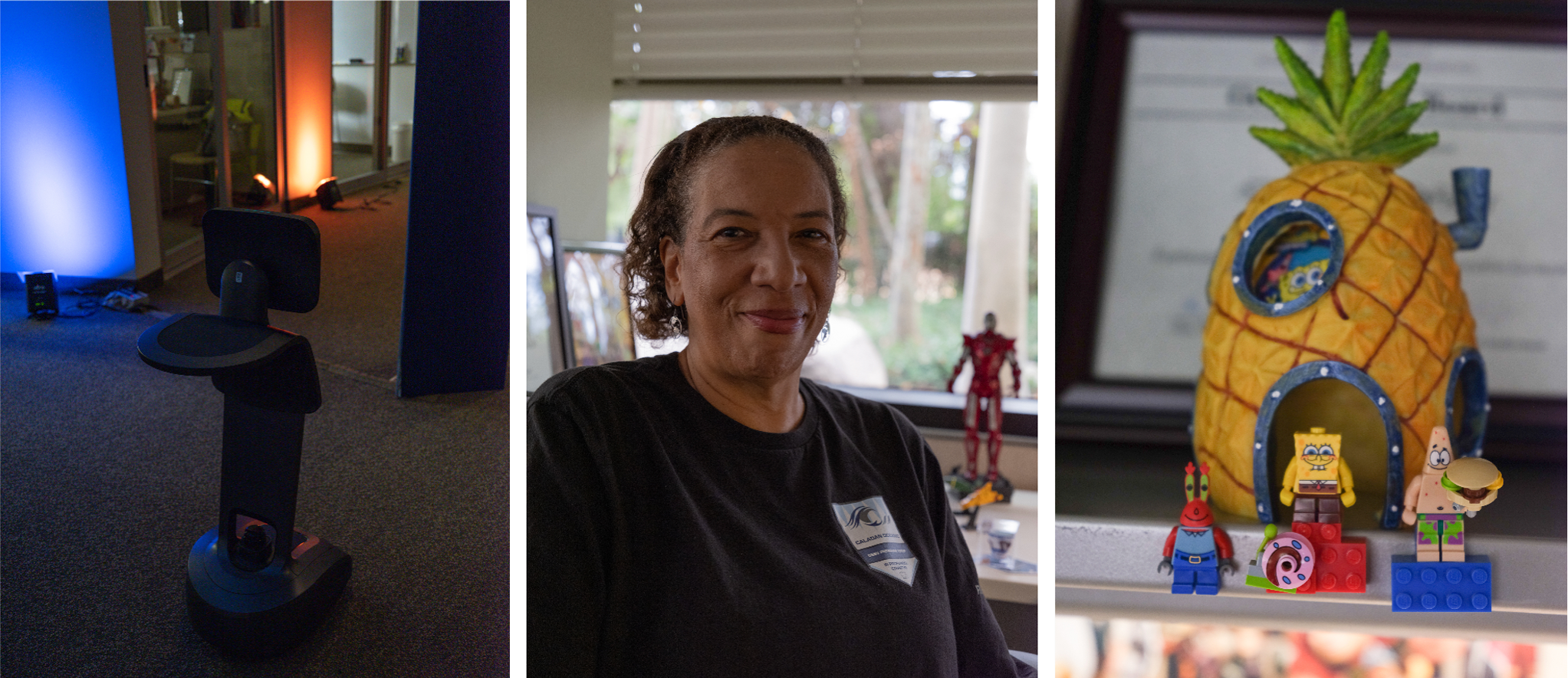
Wright resides in Redlands where she is Chief Scientist at Esri. Esri is a leading developer in geographic information system (GIS) software, location intelligence, and mapping. Wright has played a critical role in integrating GIS technology to ocean and coastal science, where she worked to create the first ocean GIS data model. Wright says that these maps are developed using soundwaves.
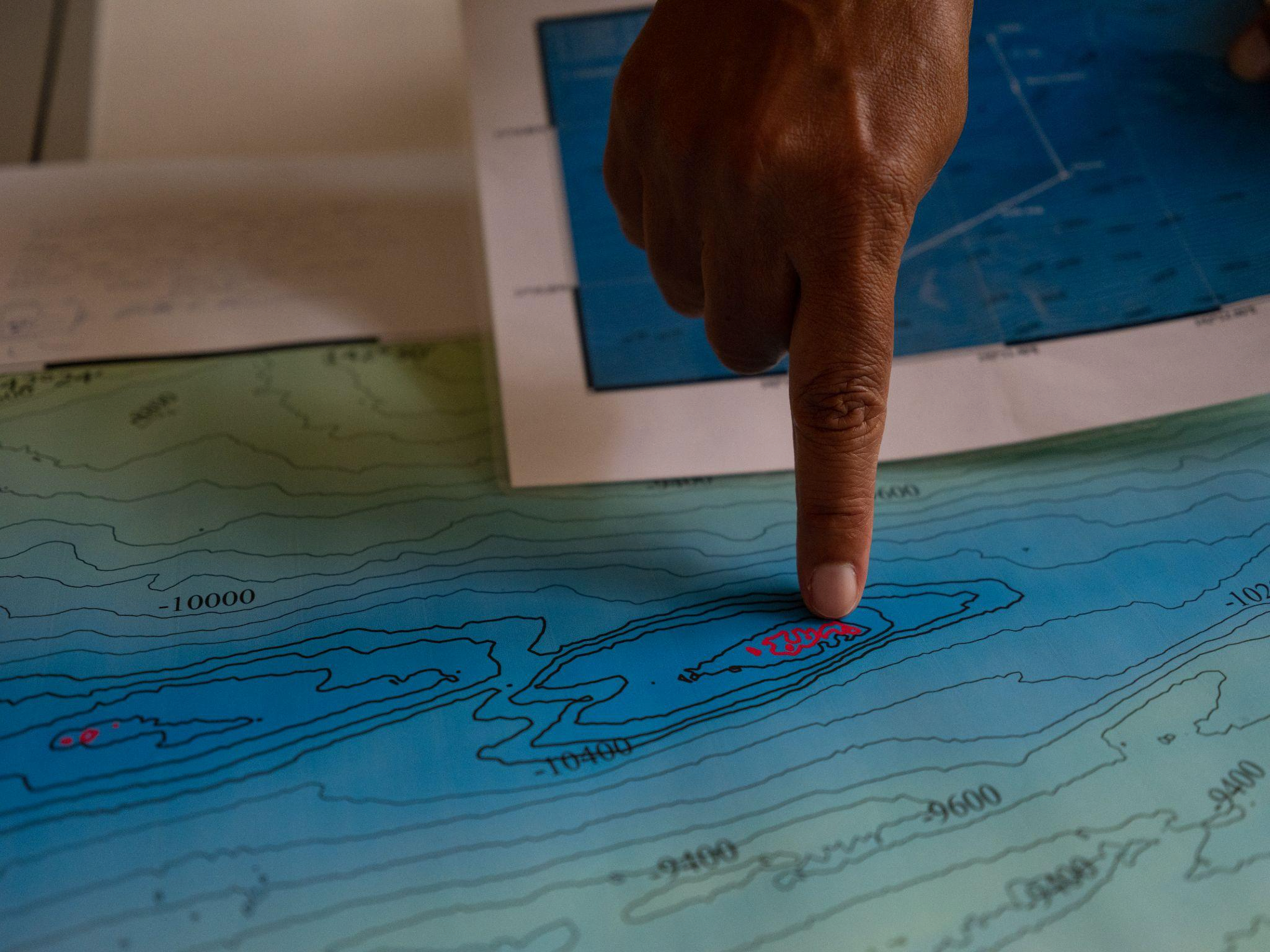
“Basically, what the instruments do is they measure the amount of time that it takes for these [sound] pulses to go down to the bottom [of the sea] and come back,” explained Wright. “The amount of travel time is converted to a distance, so that’s where we get the maps of the topography.”

But Wright said that at extreme depths it is very difficult for this technology to properly function. “The technology tends to break below 6000 meters, because of the high pressure,” she said. “The pressure at the bottom of Challenger Deep is 16,000 pounds per square inch.” If there was a problem during her expedition, the submersible ship would have combusted in a matter of seconds, Wright noted.
One of the goals of her Challenger Deep expedition was to test a mapping device called a sidescan sonar and determine whether it was able to operate at this pressure. Instead of time, the sidescan sonar uses sound pulse strength to determine topography. Wright and her team hoped to use the device to collect data to help make a high resolution map of a particular area of the Challenger Deep. “Sort of like an aerial photograph of part of the trench,” she said.
The use of sidescan sonar was successful. Wright says this is a tool for more precise scanning and mapping of the seafloor.
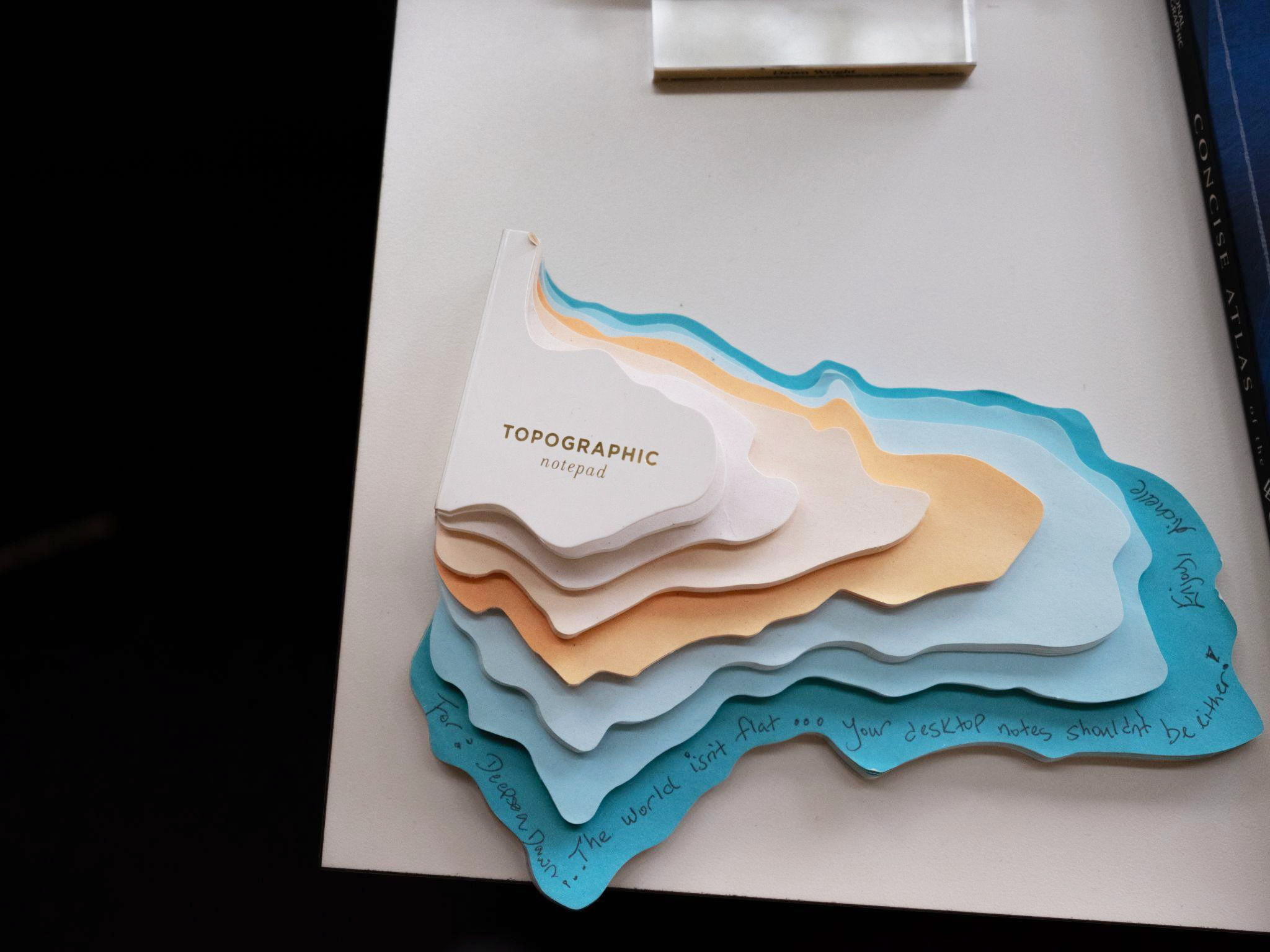
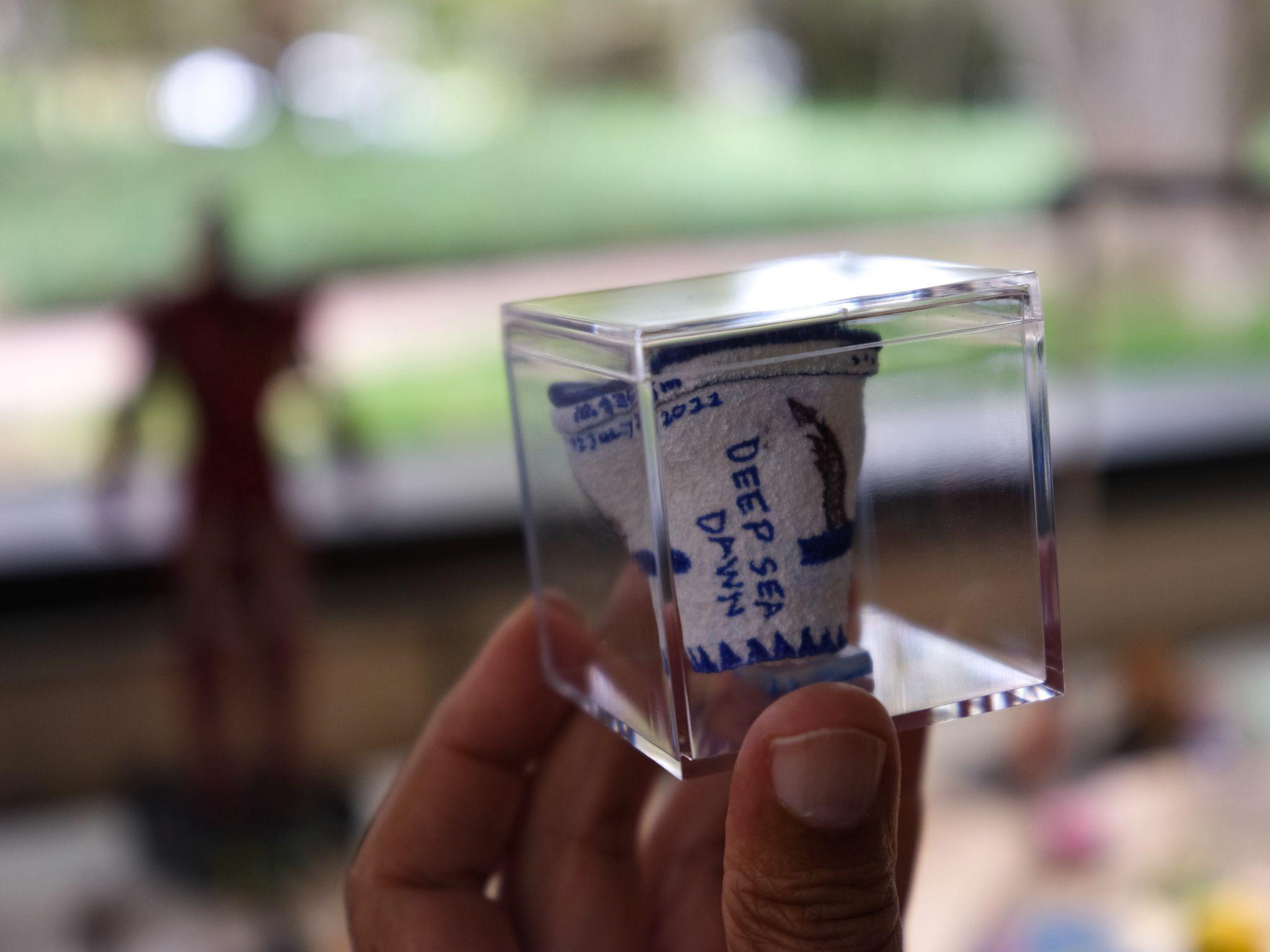
Along with the other technology onboard their submersible ship, designed and piloted by Victor Vescovo, Wright’s colleague who completed the expedition with her, Wright also brought along styrofoam cups as she often does on deep sea expeditions. The cups shrunk to the size of a finger knuckle from the pressure of the nearly seven mile deep dive. She says that the common item– turned trinket– makes for a great souvenir. Wright keeps one on her desk at Esri.
“I’ve been asked a lot about the significance of being the first Black person [to complete the Challenger Deep dive]. And I know for me it is to be able to see other women doing science,” Wright said. “Because growing up, there were no other Black women in oceanography.”
Growing up, Wright was encouraged by Mae Jemison, an engineer and former NASA astronaut. Jemison was the first Black woman to travel to space. “To see her be an engineer and go into space, that encouraged me to go into the ocean,” she shared.
“For young Black women in the Inland Empire, if they are dreaming of doing something big and adventurous or scientific; if this encourages them to do whatever it is that they want to do, I think that would be really cool and important. People don’t necessarily have to do what I did.”