


Overview:
CSUSB students and staff met with new University Police Chief Steven Griffin to discuss rebuilding trust following a controversial September police encounter involving Black students. Organizers emphasized that transparency and daily behavioral changes are necessary to address historical grievances regarding racial discrimination. While Griffin highlighted his personal background and promised to investigate misconduct, participants stressed that real progress requires direct accountability from individual officers.
Aryana Noroozi
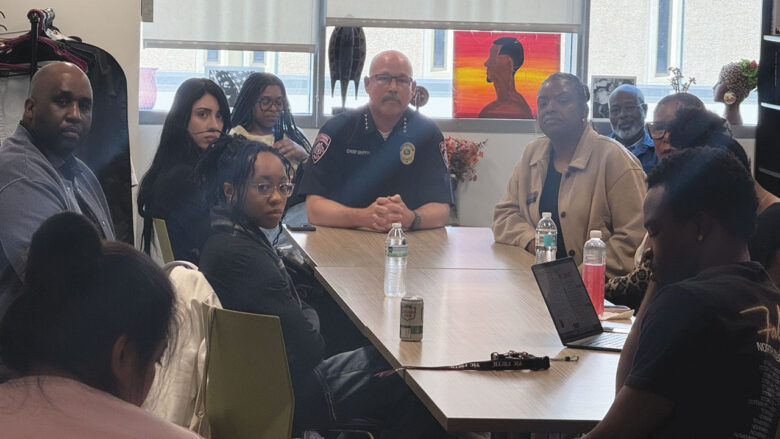
California State San Bernardino students, staff, and alumni gathered for a conversation with the university’s new police chief on Tuesday, Oct. 13; their message was clear – that rebuilding trust with Black students will take more than his presence. They said it will require changes in how officers treat students every day, and openness about what the department does when they don’t.
The CSUSB Alumni Pan-African Alumni Chapter and the Black Student Union organized the community meeting at the Pan-African Success Center. It came just a month after San Bernardino Police Department officers detained a group of mostly Black college students at The Glen, an off-campus student housing complex. University Police Chief Steven Griffin was the guest speaker, and BSU President Ayanna McAllister moderated.
On the night of Sept. 7, students from CSUSB and San Bernardino Valley College had gathered at The Glen’s pool to barbecue and swim over Labor Day weekend. According to students who were there and bystander video posted to Instagram, officers entered the pool area with guns drawn, ordered students to the ground, and held them handcuffed against a gate. Officers said they had received a call reporting more than 20 people at the pool and a firearm. Students say neither was true.
Aniya White, media relations representative for the Pan-African Alumni Chapter, opened the meeting by explaining why organizers wanted to hear from campus police. The Glen is off campus, but it houses students.
“So we’re wondering, well, why weren’t university police contacted instead?” White said. “What really is your guy’s position? What do you do, and how can you be helpful towards students?”
Recounting what students have described, White said the night began with “some kind of conflict with a tow truck driver, and after that conflict, police had been called.” She said students still don’t know whether the report that brought officers there was true.
According to White, officers arrived with “lights off, silence, like full SWAT, like full formation, completely going in.” She said they detained people beyond the pool area, including “people who were just coming out of their house, coming out of the garages.”
Asked for an update, Griffin gave a brief answer: “Well, I can say that the investigation was still going on.”
Several speakers said the frustration in the room went beyond that night.
“It’s a history of distrust, it’s a history of racism, it’s a history of discrimination,” one student said. Speaking directly to Griffin, [she] added, “I feel like it’s always been a response to a question as opposed to listening and hearing them out…the issue goes beyond the Glen incident,” she said.
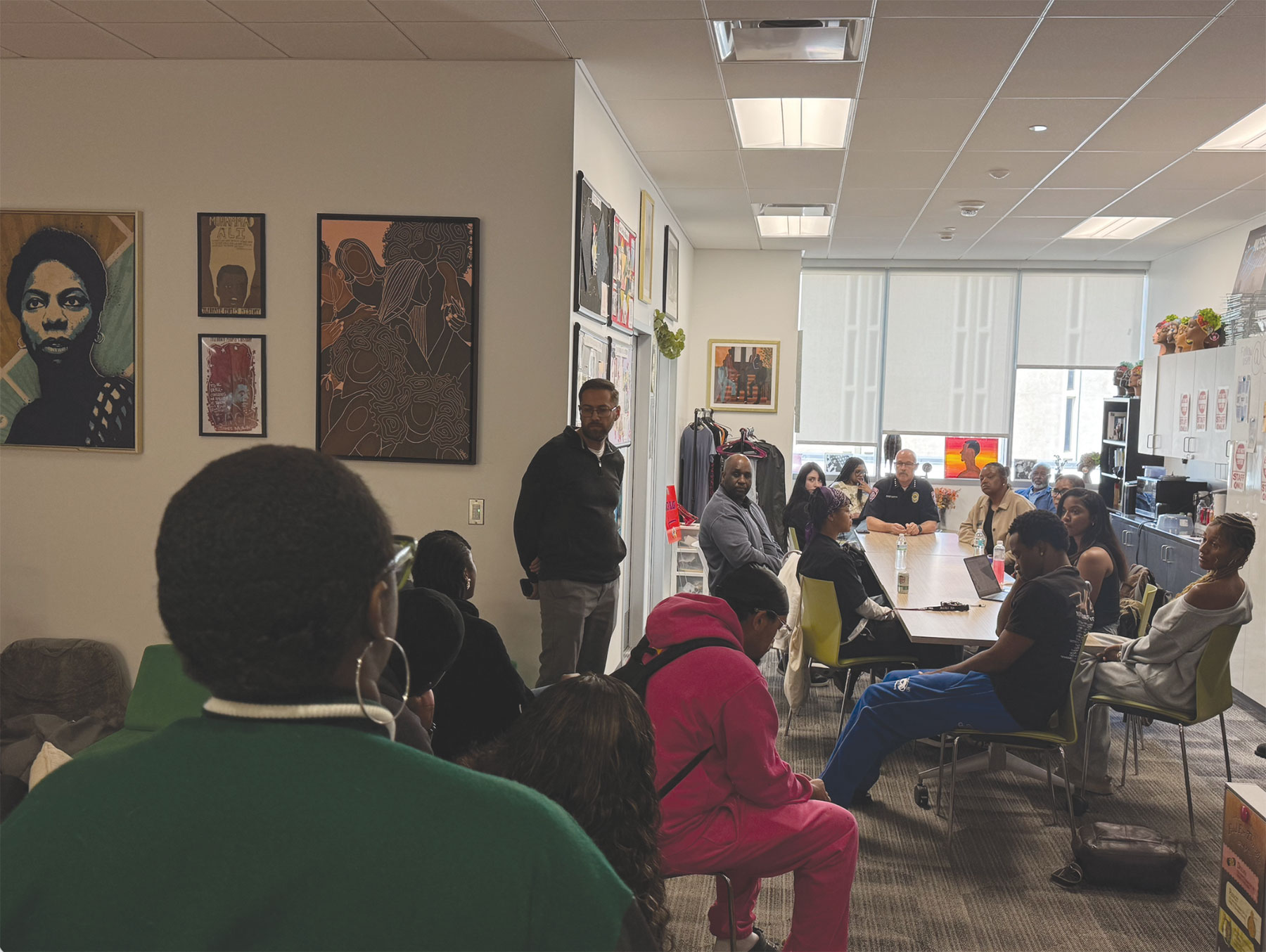
Another student said she had walked past the gathering at The Glen as it was starting, and decided to go home to do work instead of joining. Responding to an earlier comment about people running from officers, she said “People are running away because they don’t want to be harmed.” She added that if she had passed by at a different time, “I could have also been harmed in that way.”
Later in the meeting, White returned to the question of accountability. She told Griffin that as head of the department, he answers for how his officers behave.
“We don’t want it to seem like we’re attacking you or anything … but we hold you to a higher standard because you are the one who is in charge of these people,” she said.
White said answers from people in positions of power can “seem a little PR trained.” She also said students are rarely told what comes of complaints against officers.
“We don’t know that the officer is being reprimanded or not reprimanded. We have no idea,” she said. When students hear about bad encounters and never learn the outcome, she said, the result is: “I don’t want to call them. I don’t want that to happen to me.”
She asked the department to communicate publicly when concerns about officers are raised, not just with the people directly involved.
When a student asked whether he had a plan of action, Griffin said he was still learning the department.
“I’ve only been here three months, right? I’m still getting my feet wet. I’m still reviewing everything, getting to know everybody,” he said.
He pledged to look into any officers “that are not being kind or courteous or being rude or making you guys feel uncomfortable,” and said, “We will address that as a department and as a whole.”
Griffin then shared something he said he rarely talks about.
“I don’t always share this, but my stepmom is African American,” Griffin said. He said she has been his mother since he was 12. Now 53, he said he also has African American sisters and nephews. “They’re part of my community,” he said.
He described growing up in a blended, interracial family at a time when, he said, “the biracial marriage back in the ’80s was brand new, right? So I mean, I’ve been part of that since I was a little kid.”
Griffin said he does not claim to share the students’ experience because he is not African American. “But I have lived in that environment, and I have that knowledge,” he said.
“And I don’t just throw that out there just to try to get sympathy, but it’s where that’s where I come from,” Griffin said. “I want to be here to help you and make it a better experience for you guys.”
Cherica Bell, CSUSB’s associate director of culture and climate and a 2013 alumna, said she has watched several police chiefs come and go. She cautioned that bringing concerns to the top has limits.
“Sometimes the head does not know what the body is doing, right?” Bell said.
She said Black staff members often hear about students’ encounters with police informally, long before the department learns of them. Real change, she said, would require officers to answer for their own conduct.
“You guys need to sit face to face with these officers who are doing whatever they’re doing and let them know you did this. You were the one who responded. We don’t like the way you responded,” Bell said.
“I don’t want to say it’s pointless. I appreciate you being here, but it’s the first step,” she said.
Another suggestion was proposed: that officers meet with students informally, suggesting “a conversation just in civilian clothes with this group.
Concerns about campus safety came up as well. One student said her car had been broken into in a campus parking lot. She asked whether the parking lot cameras actually work and was told students cannot view footage themselves. Griffin offered to look into her case personally.
Griffin closed by thanking attendees for their feedback and said: “We’ll definitely meet back up.” No date for a follow-up meeting has yet been set.