



By Corey Arvin, Staff Writer
Ray Rice, NFL debacle spotlights violence against women and creates national conversation.
Exactly 20 years after the passing of the Violence Against Women Act (VAWA), domestic violence has been thrust into a national discussion about how such violence should be dealt with. The NFL has become the focal point of the conversation, with domestic violence groups calling for a stronger and more uniform response to players involved in incidents of domestic violence.
A large part of the controversy centers on the jarring surveillance footage of Ray Rice punching his then-fiancé Janay Palmer unconscious in an elevator. But domestic violence activist Eliza Daniely-Woolfolk cautions that the Ray Rice Controversy is just one of innumerable incidents that occur every day and still need to be addressed.
“After the [sensationalism] fades away, we want people to know this is an ongoing issue and 99.9 percent of the women who suffered similar fates will never be seen,” she said.
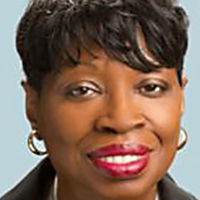
Daniely-Woolfolk is CEO of Alternatives to Domestic Violence, a non-profit organization based in Riverside County that supports women and families who are victims of domestic violence.
Daniely-Woolfolk believes the impact on children is a critical part of the issue that should also be a part of the discussion about preventing and addressing domestic violence. As an example, she points to how Child Protective Services (CPS) often responds to domestic violence between parents because the children have a high propensity for becoming victims of abuse.
“There is the issue of impact on children. The children do not walk away unscathed. … With children that have been traumatized, you can sometimes see the trauma. Some are very withdrawn, some are all over the place. There is a host of issues. The children who are exposed to violent behavior are often victims of abuse,” she said.
President Bill Clinton signed VAWA into law on September 13, 1994, yet how domestic violence is addressed as a policy issue remains a debate.
Vice President Joe Biden, who co-sponsored VAWA in 1990 as a senator from Delaware, will convene legal scholars and professionals, and Department of Justice officials for a Summit on Civil Rights and Equal Protections for Women. No date has been set.
Summit participants will brainstorm solutions to end the gender bias in the justice system that affects the way cases are handled. They will also examine ways to allow survivors to sue their assailants in federal court – a VAWA provision the Supreme Court struck down in 2000.
In addition to the summit, the Vice President’s Office released a state-of-affairs report on the issue of violence against women.
“When VAWA was first passed, almost every state crime involving interstate elements (from gun crimes to cattle rustling) was covered by the federal criminal code – but not sexual assault and domestic violence,” the report reads. “Although there is still much to do, this anniversary gives us a moment to reflect on the vital, often life-saving work the Violence Against Women Act has inspired and supports. Since its passage 20 years ago, help has come on all fronts.”
According to the report there has been significant traction, both culturally and legally, on the issue.
The national rate of intimate partner violence against women has fallen 64 percent between 1993 and 2012, or 61 percent for Black Americans alone, according to the Bureau of Justice Statistics. VAWA-funded organizations have made gains in prosecution, and more services have become available for more survivors.
Today, VAWA has been expanded to serve LGBT survivors, those living in Indian country, undocumented immigrants, and college students. In 2000, the definition of dating violence was added to the law. In 2005, healthcare organizations received VAWA funding to offer long-term mental and physical care for survivors.
But there are still lingering issues.
As Biden highlighted at a commemoration ceremony last week: “We have so much more to do, because there’s still sex bias that remains in the American criminal justice system in dealing with rape – stereotypes like she deserved it, she wore a short skirt still taint prosecutions for rape and domestic violence.”
Additionally, violence against women and dating violence are problems among youth; researchers have found that 1 in 10 teens will be harmed by someone they are dating, and 1 in 5 young women will be sexually assaulted during college. Until 2009, women age 18 to 24 have had the highest rates of being victimized by intimate partners—currently, women age 25 to 34 have the highest rates.
Biden and proponents believe that in light of uneven law enforcement and judicial response at the state and local level, VAWA should be allowed to grant the federal government jurisdiction to enforce the equal protection clause of the Fourteenth Amendment. Additionally, other crimes involving interstate elements can be tried in federal court—this is not true for sexual assault and intimate partner violence.
Since the 1970s, other legal figures and elected officials have argued that granting such jurisdictional powers would be to drag the federal government into “family disputes,” or overstep state rights.
In the meantime, the Obama Administration continues to produce campaigns, initiatives, federal guidance, and public resources to help eradicate violence against women.
“On the anniversary of this landmark legislation, we rededicate ourselves to strengthening the protections it first codified, and we reaffirm the basic human right to be free from violence and abuse,” President Obama wrote in a commemorative proclamation. “Too many women continue to live in fear in their own homes, too many victims still know the pain of abuse, and too many families have had to mourn the loss of their loved ones. It has to end—because even one is too many.”